shipslides
Examples/Cuisine
Vol. XVIII / 24 decks

Cuisine

Cooking traditions, ingredients, food history, fermentation, baking, and regional cuisines. Browse curated, sandboxed HTML presentation decks in Cuisine, each with crawlable summaries, slide outlines, and topic metadata.

24
Decks
577
Slides

Cuisine presentation hub

This collection gathers sandboxed HTML presentation decks for readers who want structured, visual introductions instead of a static document. Each indexed deck includes a summary, slide outline, topics, and a standalone viewer link when the deck passes the editorial quality gate.
Cuisine32 slides

African Cuisine

A Continent of Flavors, Traditions, and Culinary Innovation

Cuisine30 slides

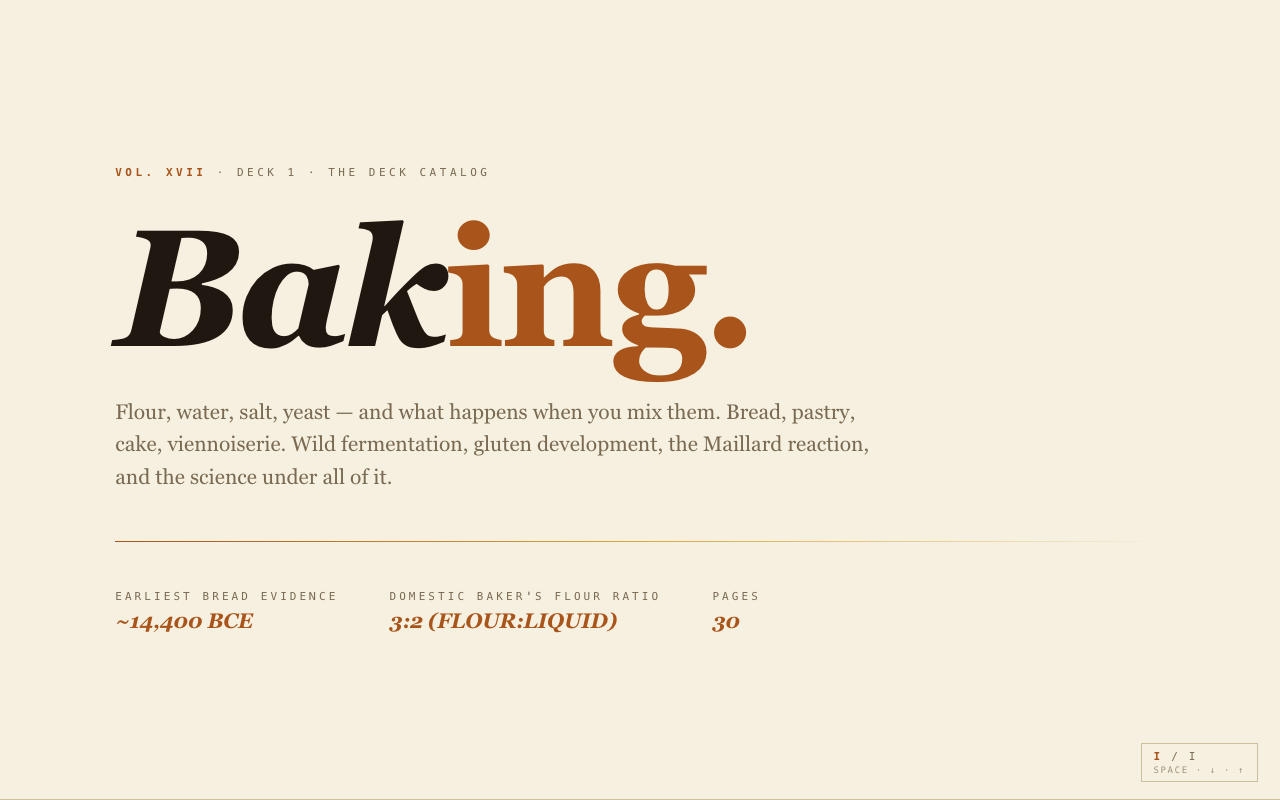
Baking

Baking is the most chemical kind of cooking. The oven is closed, the dough is alive, and what comes out depends on choices made hours before — choices about hydration, fermentation, kneading, shaping, scoring, temperature.

Cuisine30 slides

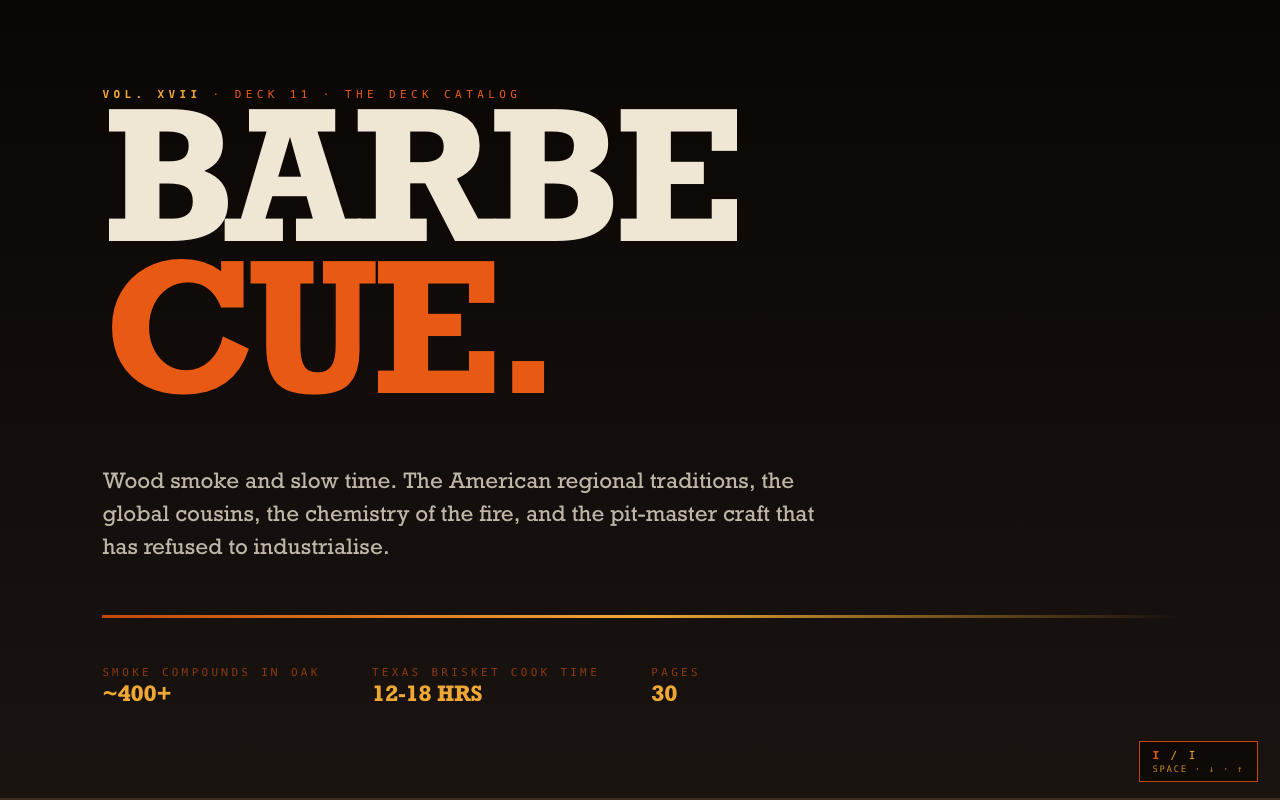
Barbecue

Barbecue is the slowest cooking. It is also the most American — not because the technique is American (it isn't) but because the four big regional traditions resolved themselves on this continent, in the last 180 years, into something specific and contested.

Cuisine30 slides

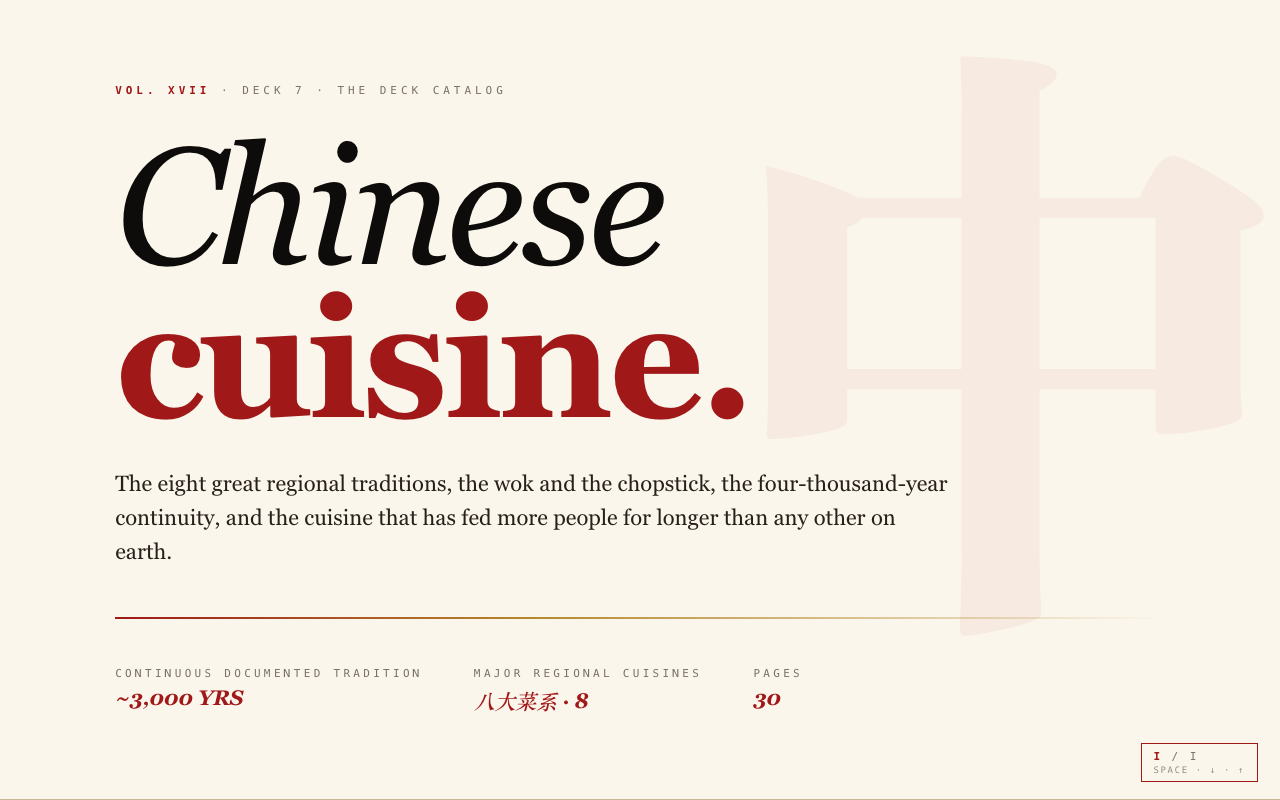
Chinese Cuisine

Chinese cooking is the longest continuous food tradition on earth. It has fed the largest population, generated the most regional variation, and produced the most-imitated cooking technique (the wok-fried stir-fry) of any kitchen in human history.

Cuisine32 slides

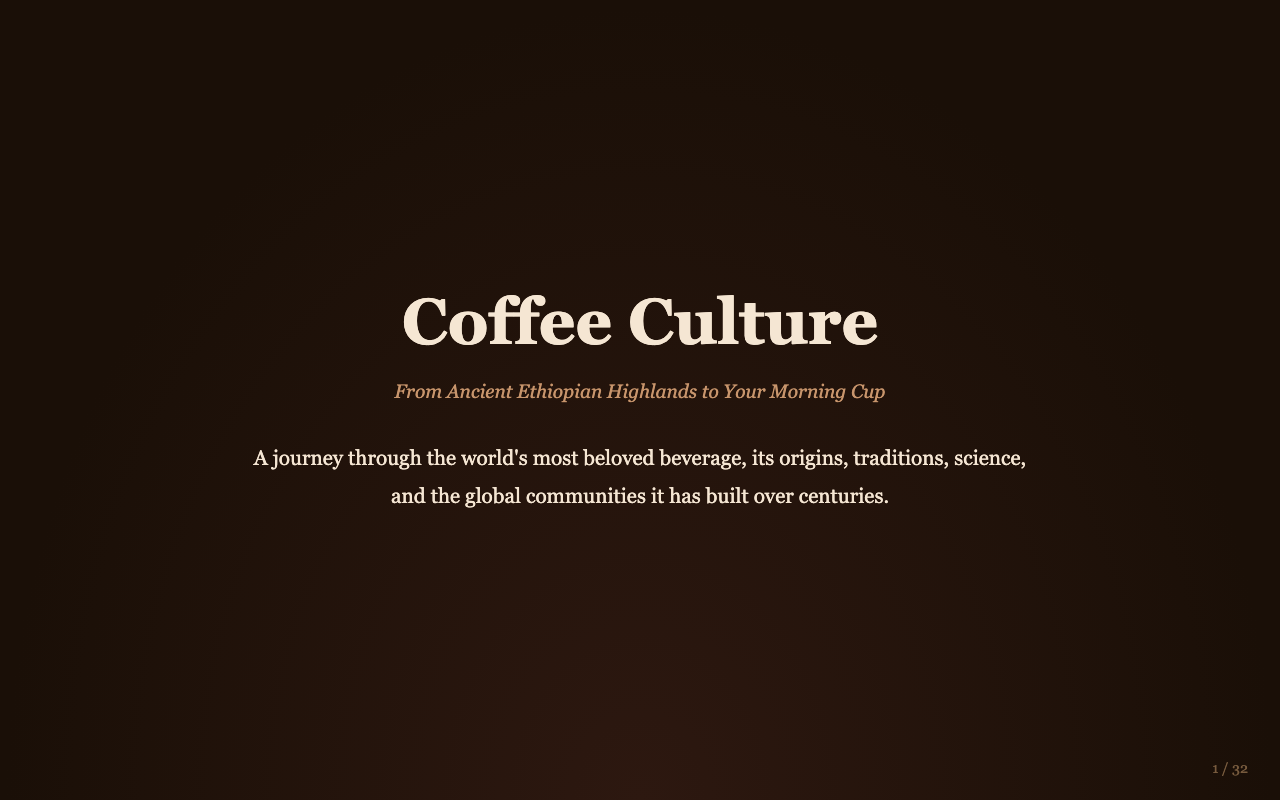
Coffee Culture

From Ancient Ethiopian Highlands to Your Morning Cup

Cuisine30 slides

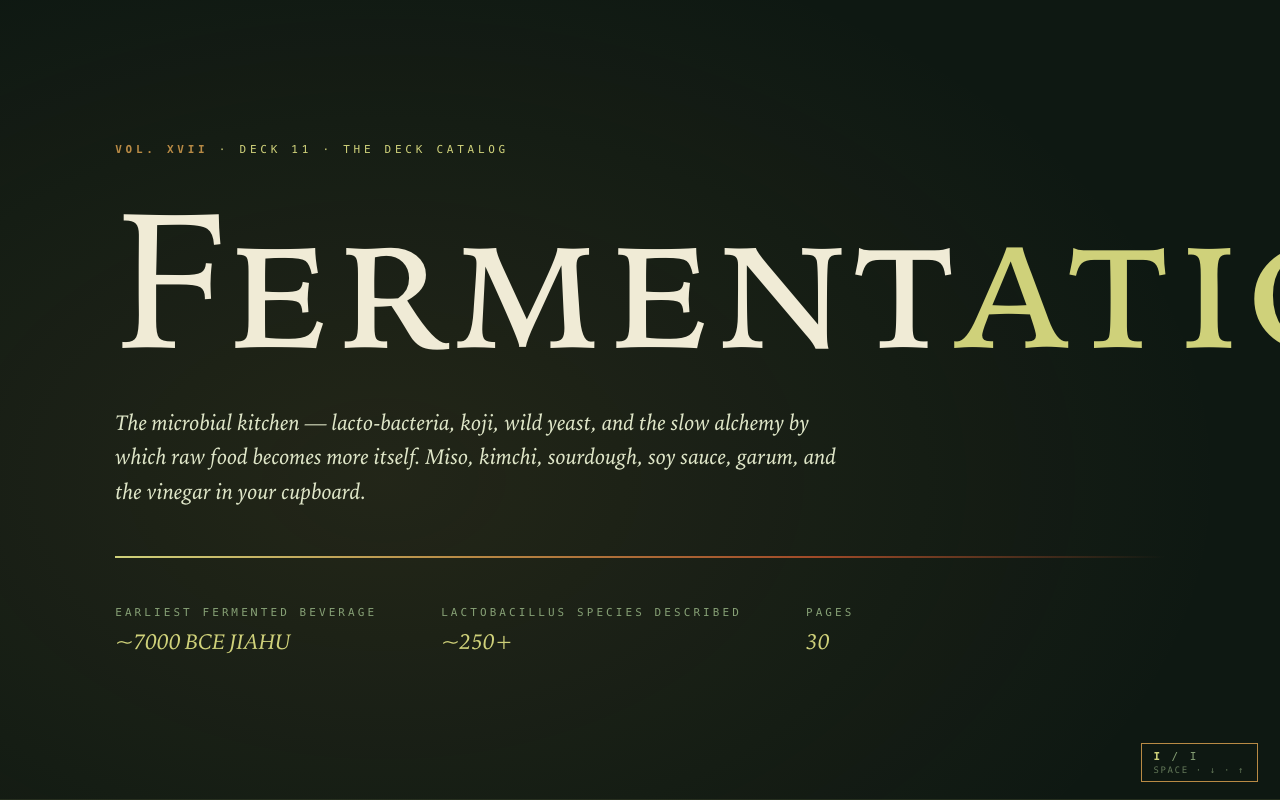
Fermentation

Fermentation is what humans do with microbes when both parties win. Yeast eats sugar; we get bread and beer. Lactic acid bacteria eat sugar; we get cheese and kimchi. Aspergillus eats rice; we get sake and soy sauce.

Cuisine32 slides

French Cuisine

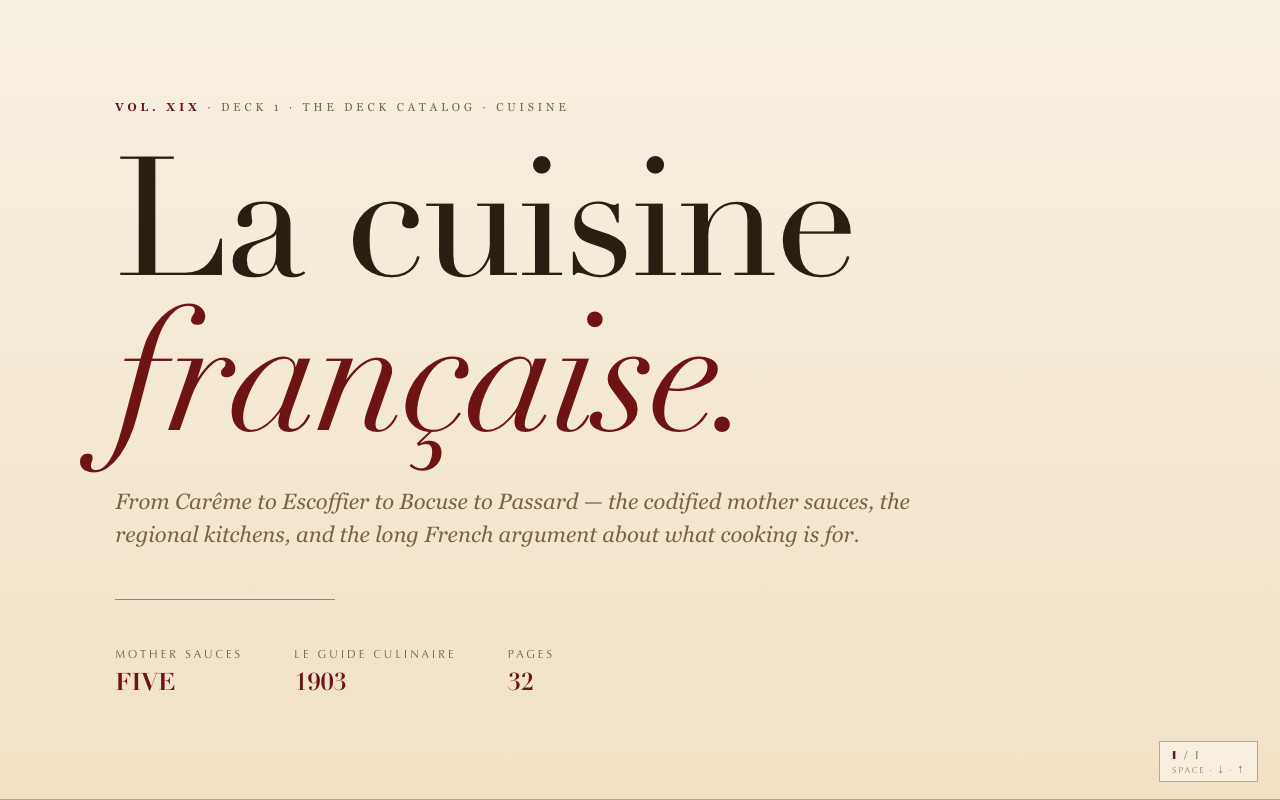
For roughly three centuries — from Louis XIV's Versailles kitchens to the nouvelle revolt of the 1970s — France set the terms by which serious cooking was judged. The vocabulary, the technique, the brigade, the Michelin star: the institutions of fine dining are French inventions.

Cuisine30 slides

Indian Cuisine

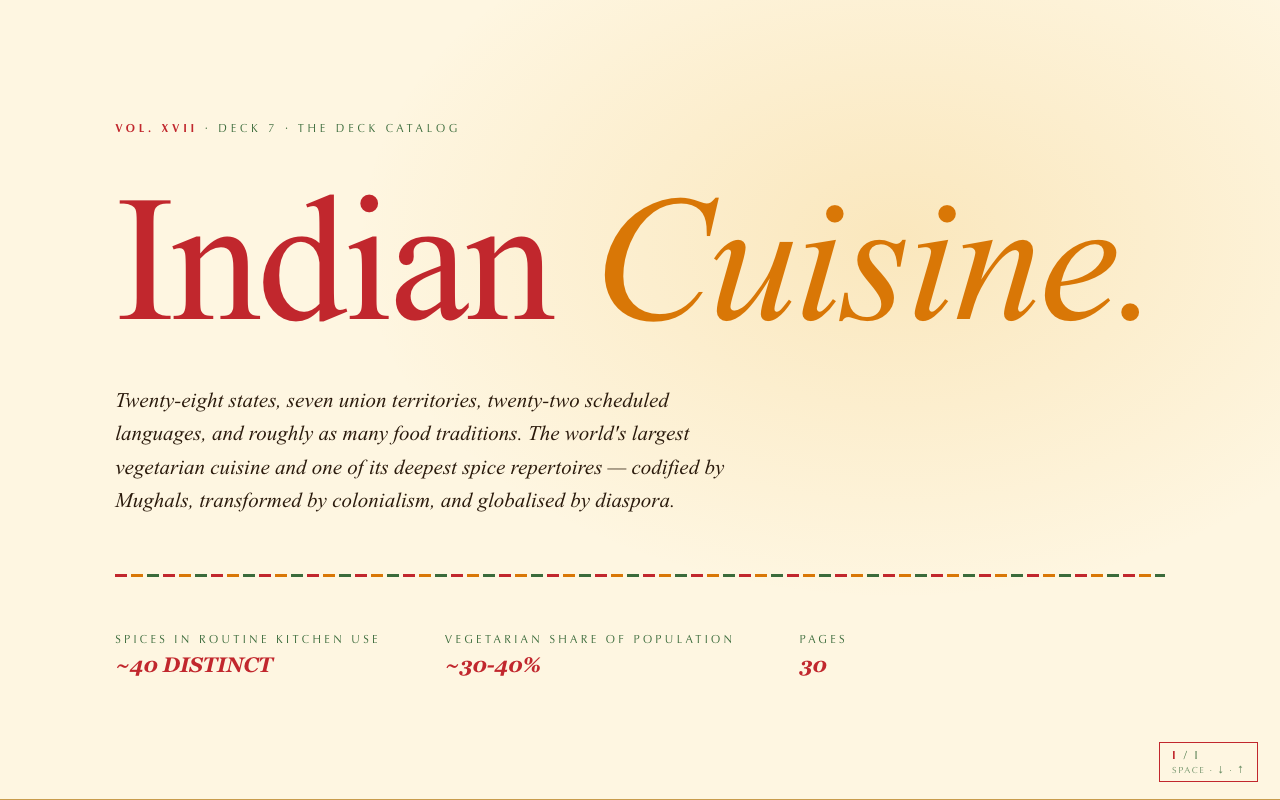
"What is Indian food?" is the wrong question. India is more linguistically and agriculturally diverse than Europe; its food is no more a single cuisine than European food is.

Cuisine32 slides

Italian Cuisine

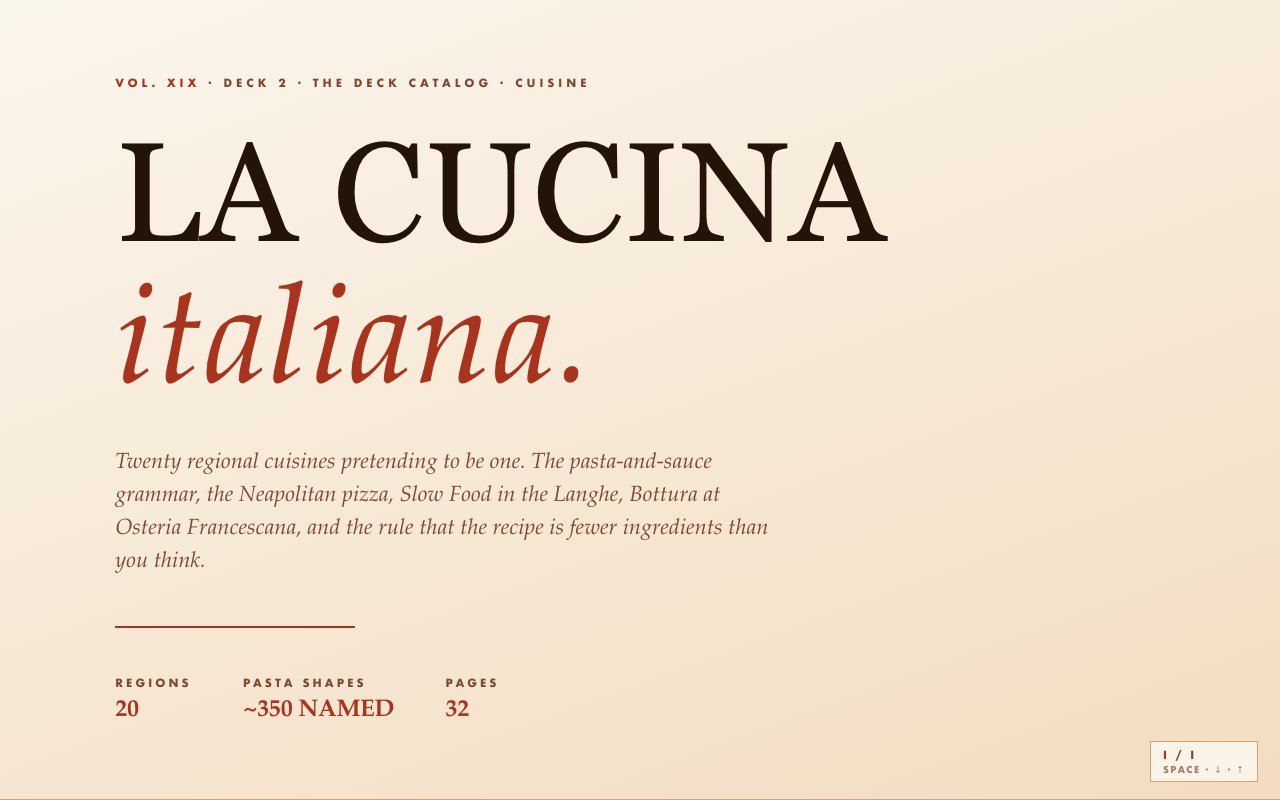
There is no Italian cuisine. There are twenty regional cuisines bound together by a confederation younger than the United States — the Risorgimento finished in 1871 — that share a few staples, a fanatical attachment to ingredient quality, and the conviction that the recipe should be shorter than it is.

Cuisine32 slides

Japanese Cuisine

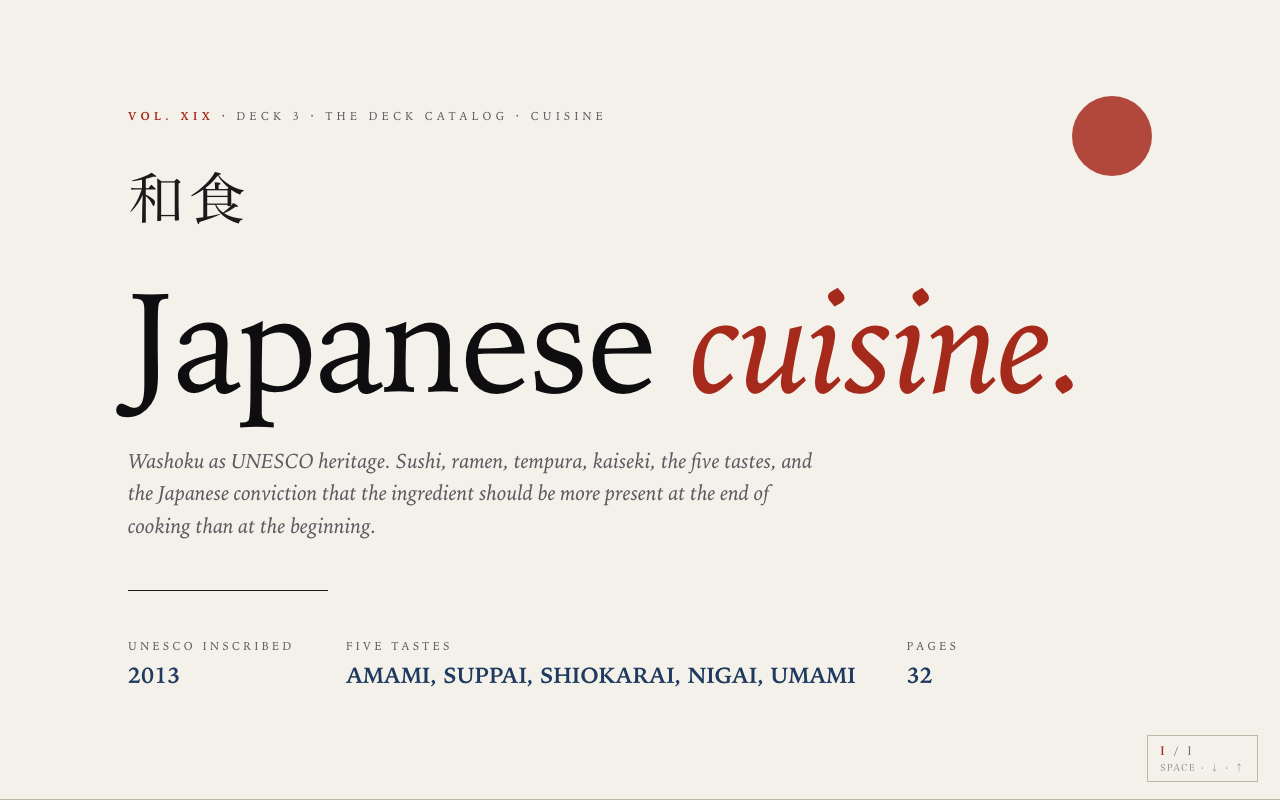
UNESCO inscribed washoku — "the dietary cultures of the Japanese, notably for the celebration of the New Year" — on its intangible-heritage list in 2013. The category is broader than the foreign image of Japanese food. Sushi and ramen are the foreign ambassadors; washoku is the home meal of rice, soup, three side dishes, pickle.

Cuisine30 slides

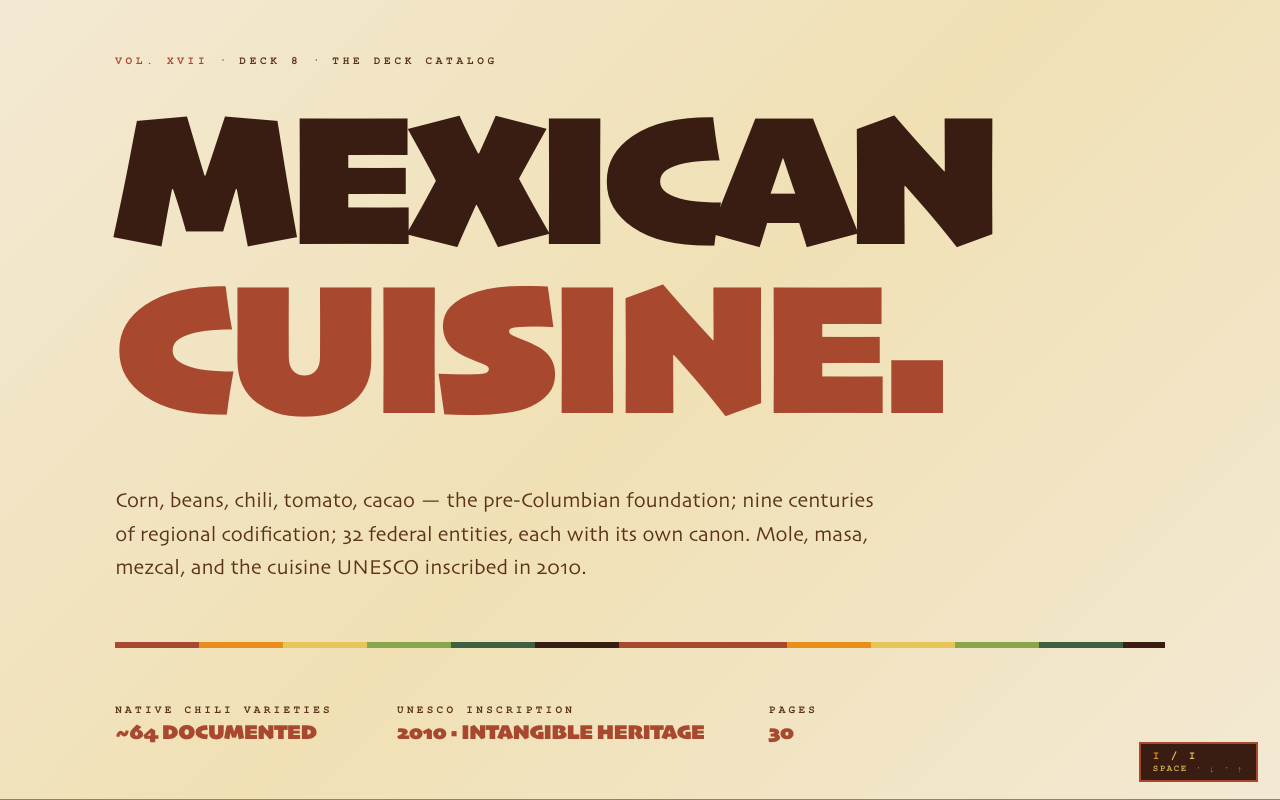
Mexican Cuisine

Outside Mexico, Mexican food usually means Tex-Mex. Inside Mexico, the cuisine is one of the world's most regionally complex — UNESCO inscribed it as Intangible Cultural Heritage of Humanity in 2010, the first cuisine ever so recognised.

Cuisine30 slides

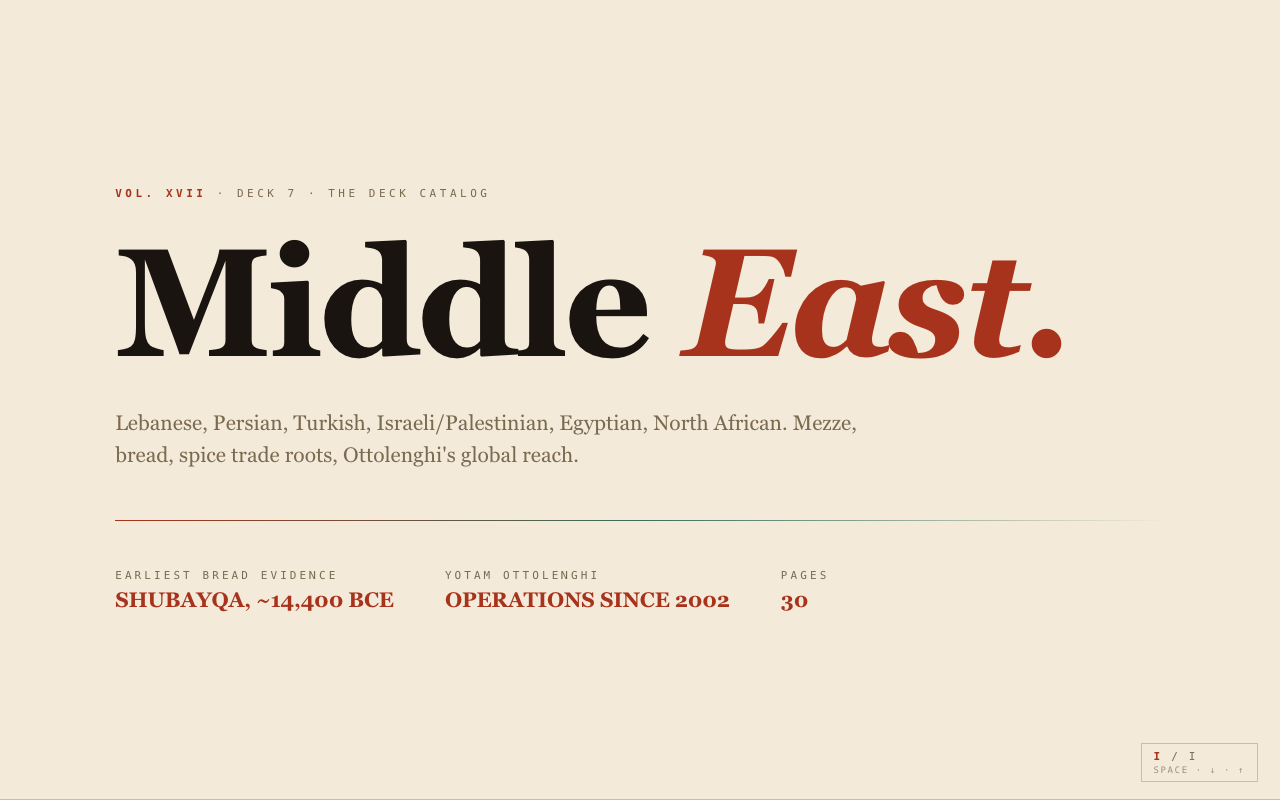
ME Cuisine

Middle Eastern cuisine is a constellation of regional traditions sharing common roots in the eastern Mediterranean and Levantine spice-and-bread tradition. Lebanese, Persian, Turkish, Palestinian, Egyptian, and North African cuisines have historical interconnections without being identical.

Cuisine32 slides

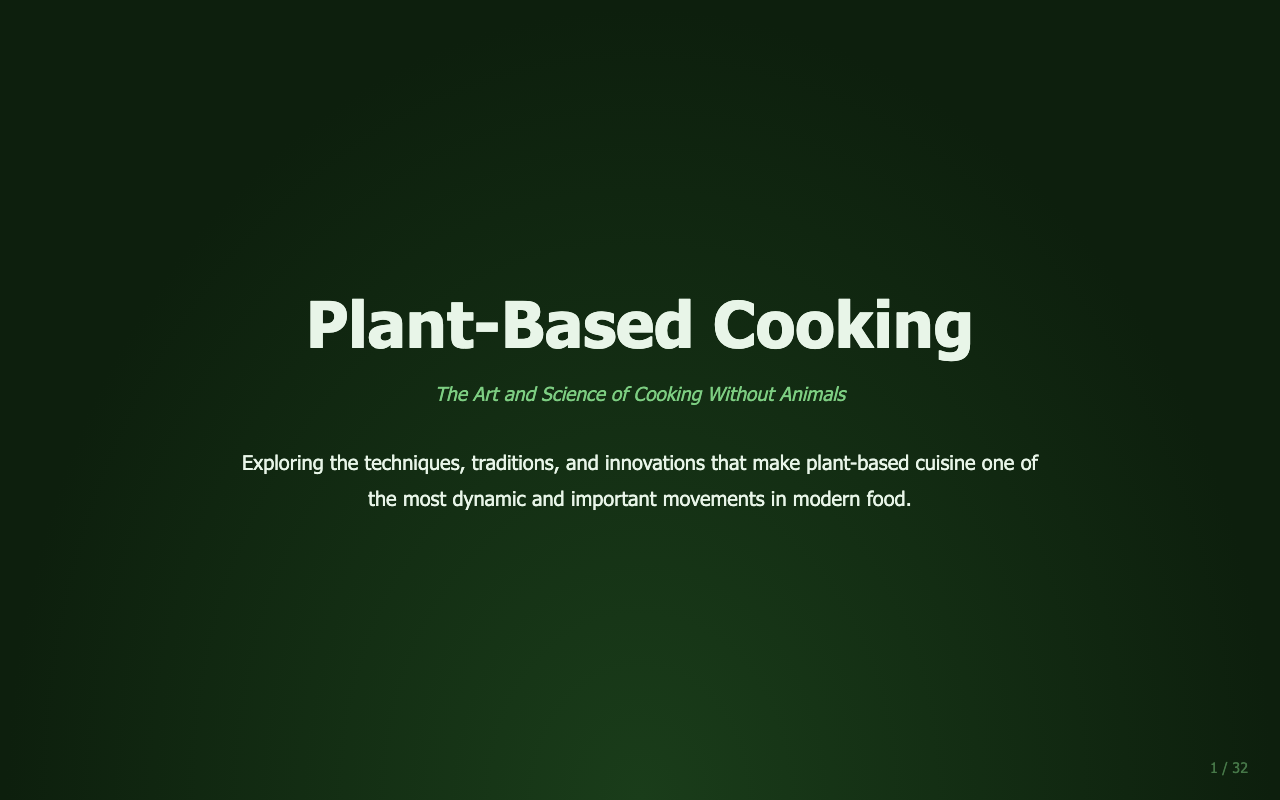
Plant-Based Cooking

The Art and Science of Cooking Without Animals

Cuisine24 slides

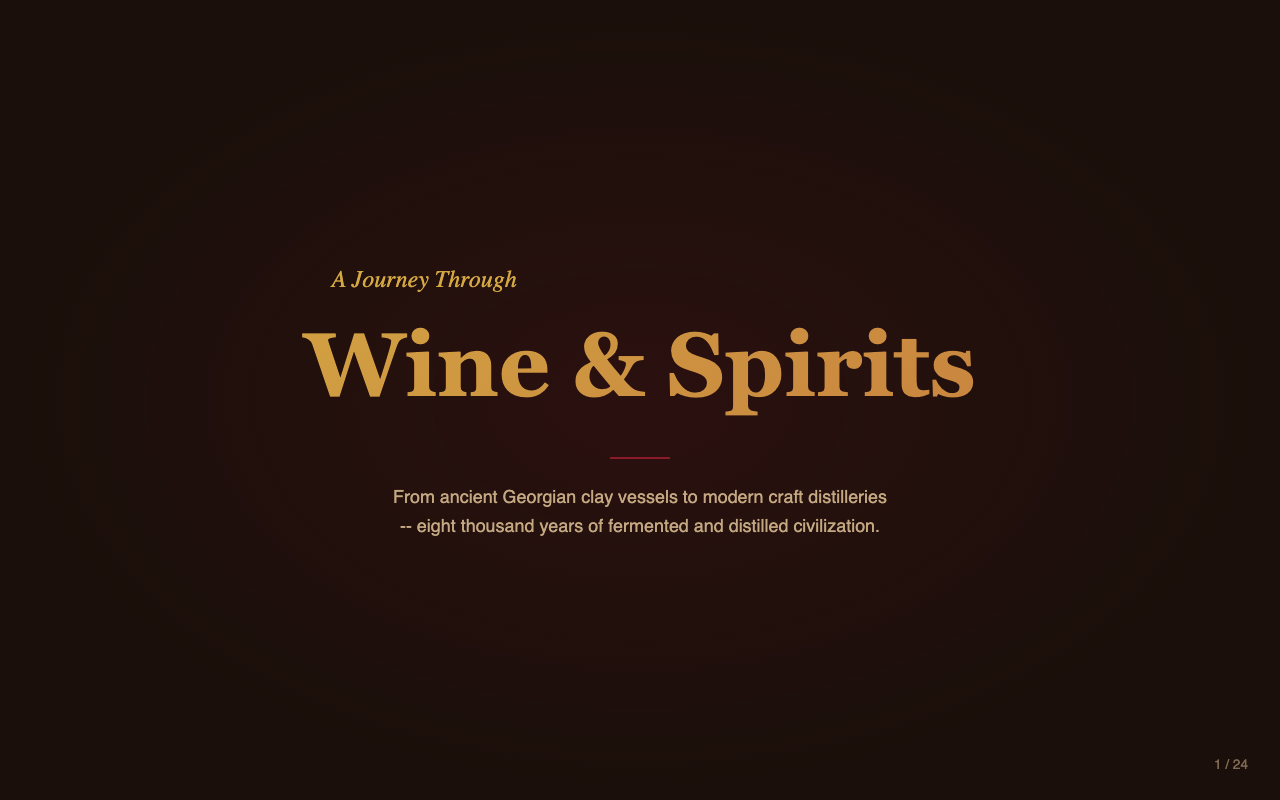
Wine and Spirits

A Journey Through

Cuisine13 slides

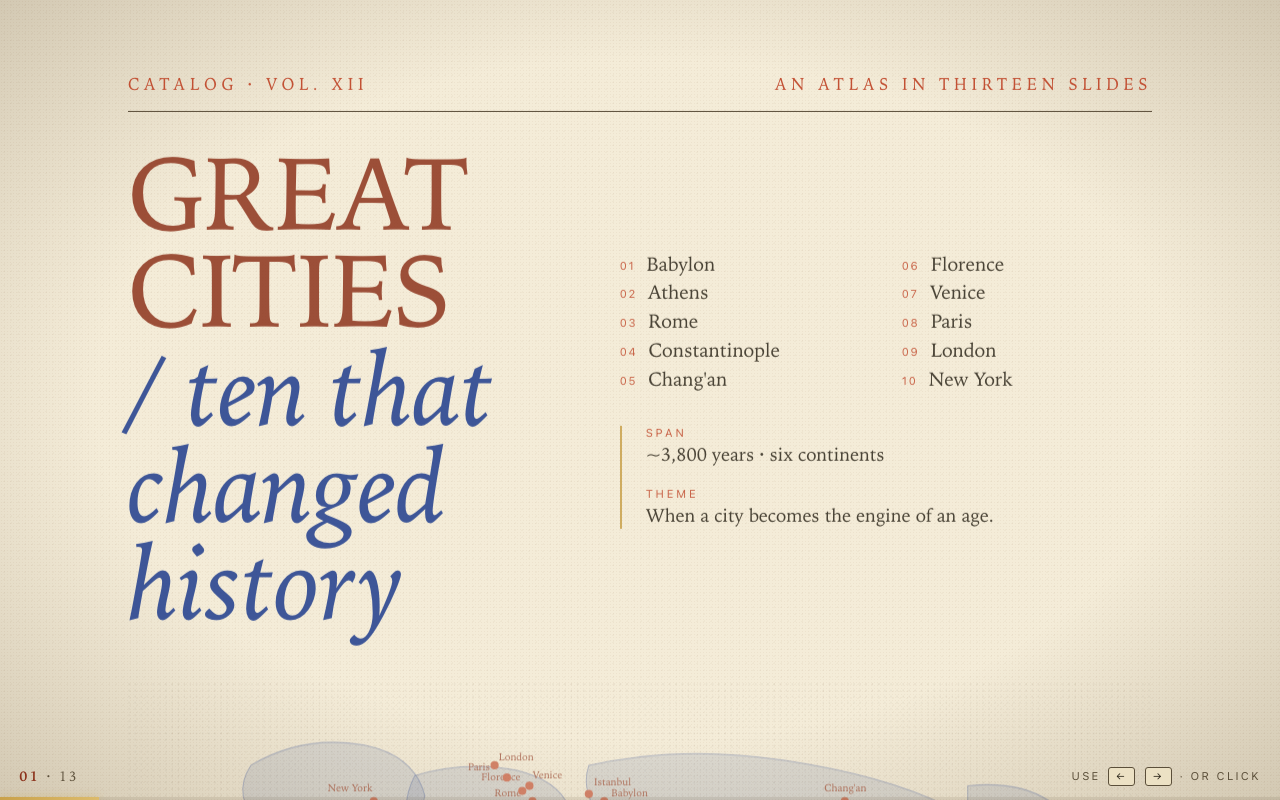
GREAT CITIES / Ten that changed history

A city of brick and clay rising from the floodplain — where civilization first learned to scale.

Cuisine13 slides

FASHION / Garments and what they say

A t Versailles, Louis XIV understood that silk and stitching could be statecraft. His regulated luxury — silver brocade, towering wigs, red-heeled shoes — marked rank as plainly as a coat of arms.

Cuisine13 slides

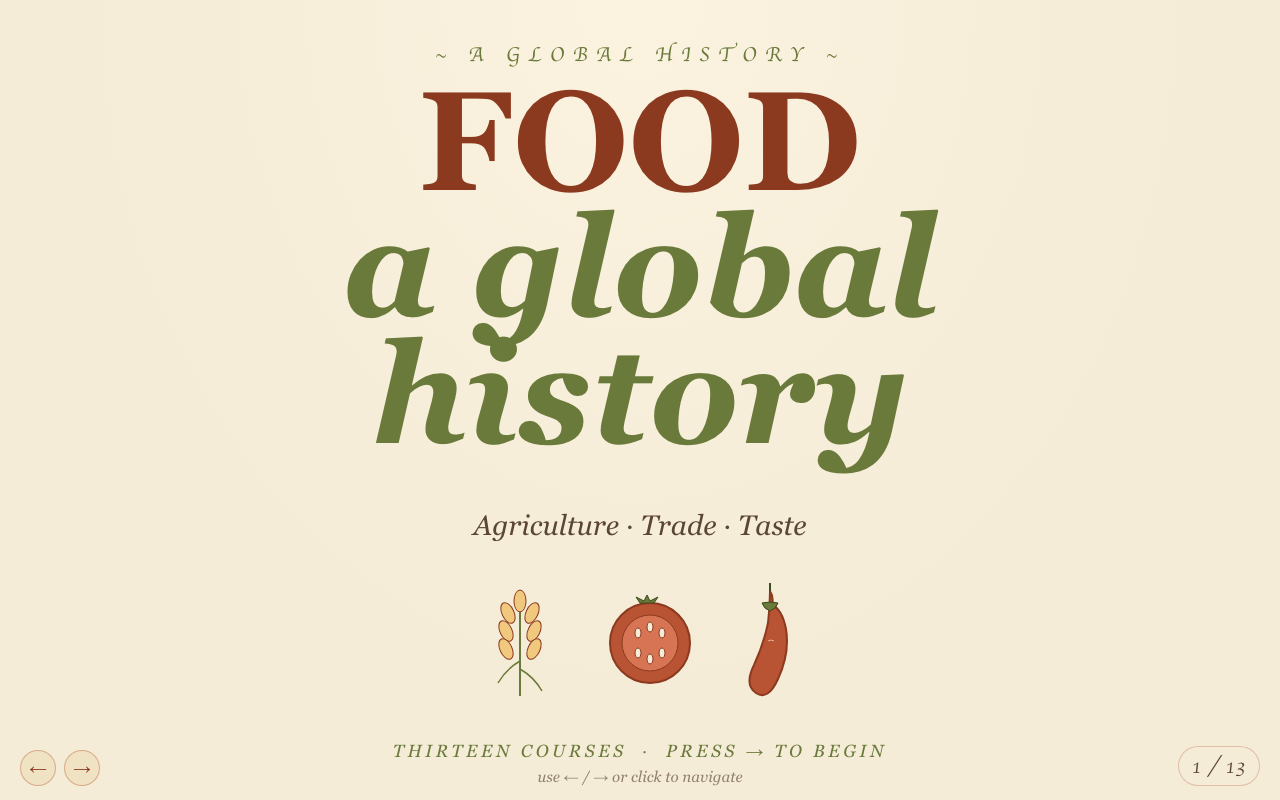
FOOD / a global history

THIRTEEN COURSES · PRESS → TO BEGIN No. 02 ~ origins ~ course one The Seven Hearths around 10,000 BC, agriculture begins — independently — in many places at once For 200,000 years humans foraged. Then, almost simultaneously, scattered groups began to plant, weed, and wait.

Cuisine34 slides

INTERNET CULTURE / forums, memes, attention

A 13-slide tour from BBS dial-tones to algorithmic feeds . Best viewed in 800x600 with a Pentium II and a fresh bowl of Bagel Bites.

Cuisine13 slides

Language / 7,000 voices

An atlas of the human capacity to mean — its sounds, its scripts, its families, its futures.

Cuisine13 slides

Migration — A Species on the Move

A species on the move

Cuisine13 slides

Mythology — The stars we tell ourselves by

We are pattern-seekers. Where there is a sky, we read constellations into it; where there is a death, we tell a story about what comes after.

Cuisine13 slides

Pop Music — A Century of Recorded Sound

Before microphones, before radio stardom — pop was a printed medium. A cluster of music publishers on West 28th Street churned out sheet music by the ream, with songpluggers banging upright pianos to sell the next hit to vaudeville singers and parlors across America.

Cuisine13 slides

World Religions / The Major Answers

A comparative survey of how humanity has answered the oldest questions: who are we, why are we here, and how should we live.

Cuisine13 slides

SPORTS — Play turned into spectacle

A 13-chapter almanac of human contest — from the agora to the algorithm.