shipslides
Examples/Science
Vol. III / 27 decks

Science

The universe, matter, cells, climates, evolution, and the methods used to test claims. Browse curated, sandboxed HTML presentation decks in Science, each with crawlable summaries, slide outlines, and topic metadata.

27
Decks
514
Slides

Science presentation hub

This collection gathers sandboxed HTML presentation decks for readers who want structured, visual introductions instead of a static document. Each indexed deck includes a summary, slide outline, topics, and a standalone viewer link when the deck passes the editorial quality gate.
Science16 slides

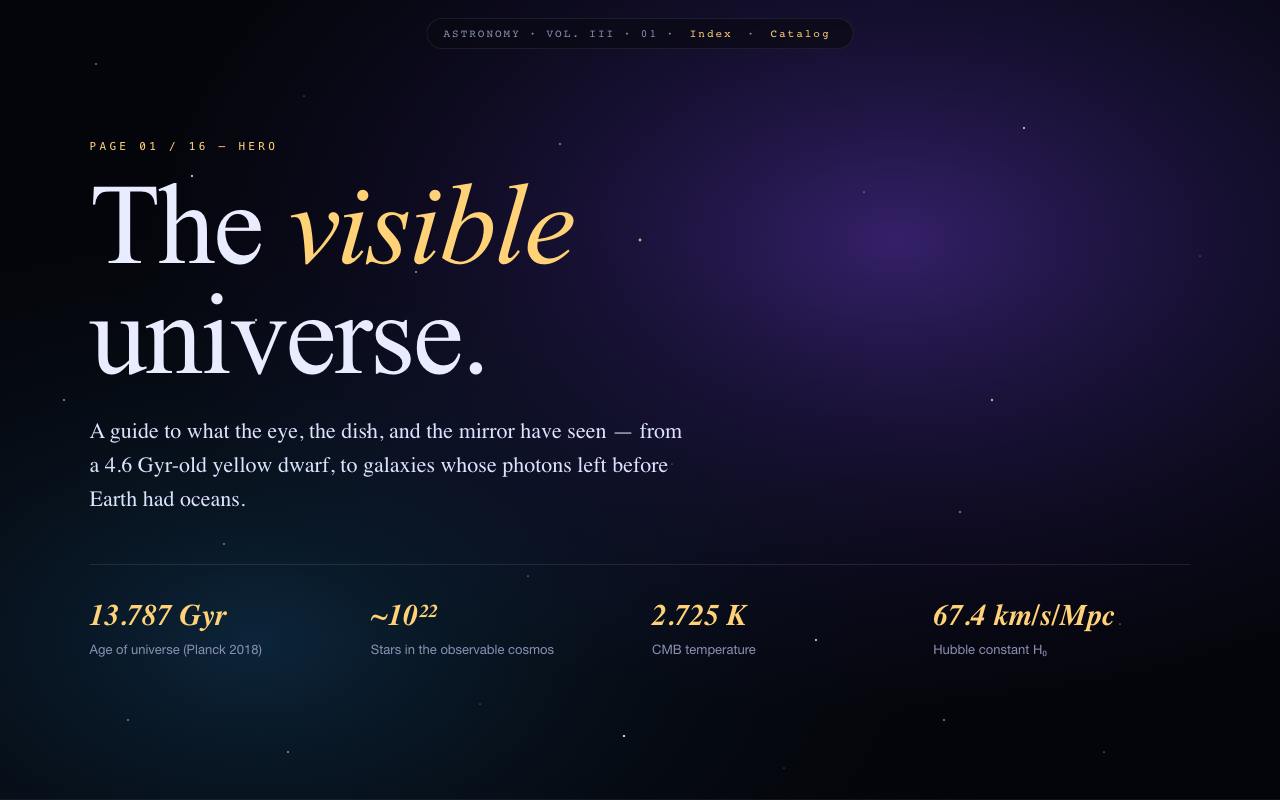
Astronomy

A guide to what the eye, the dish, and the mirror have seen — from a 4.6 Gyr-old yellow dwarf, to galaxies whose photons left before Earth had oceans.

Science30 slides

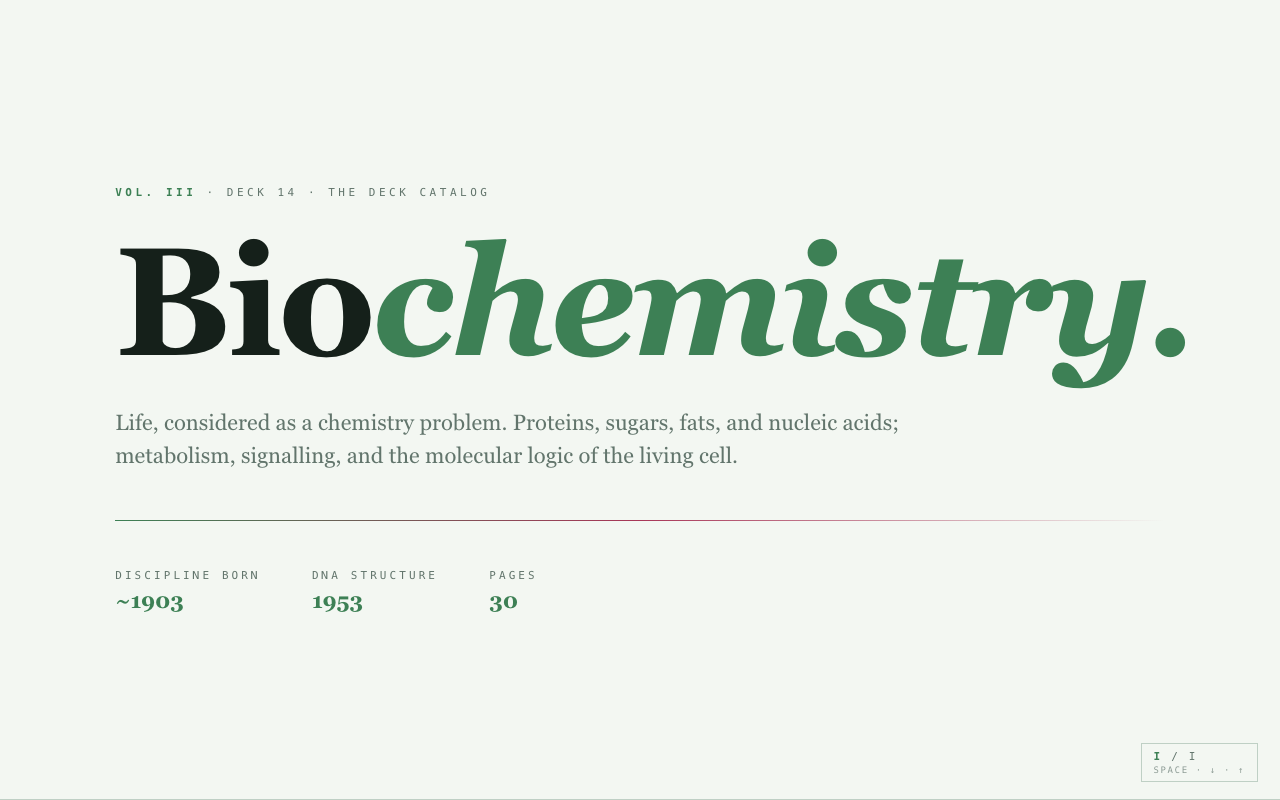
Biochemistry

Cells are wet bags of organic chemistry. Biochemistry is the study of those reactions — what molecules, organised how, doing what. Reductive in method; vast in subject matter.

Science17 slides

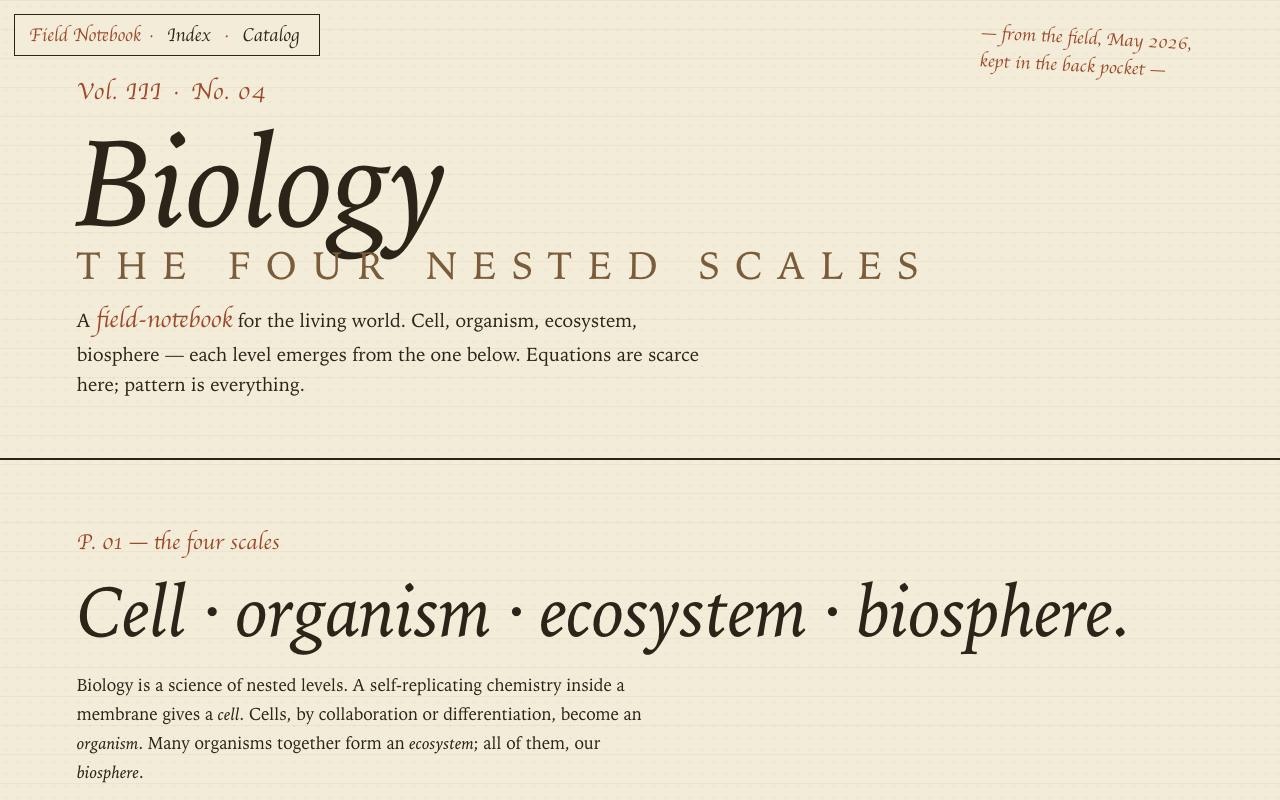
Biology

A field-notebook for the living world. Cell, organism, ecosystem, biosphere — each level emerges from the one below. Equations are scarce here; pattern is everything.

Science17 slides

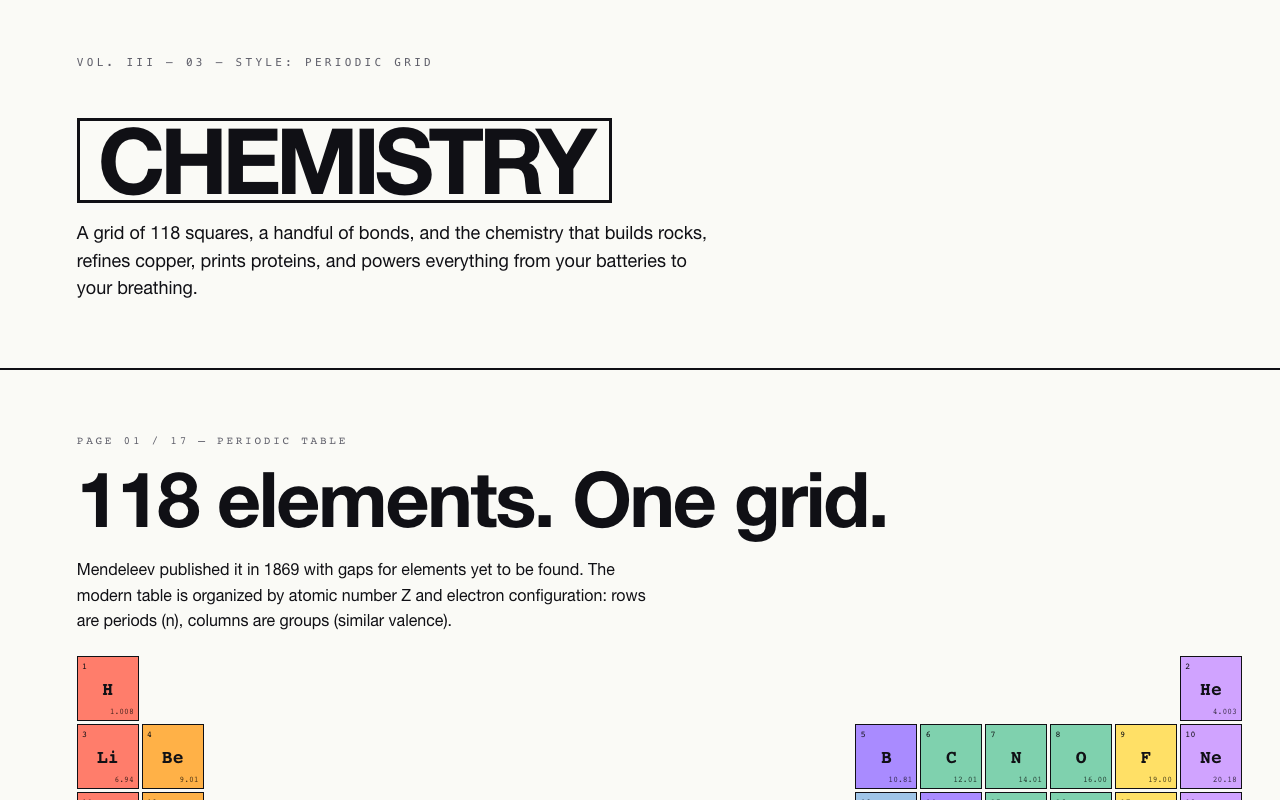
Chemistry

A grid of 118 squares, a handful of bonds, and the chemistry that builds rocks, refines copper, prints proteins, and powers everything from your batteries to your breathing.

Science16 slides

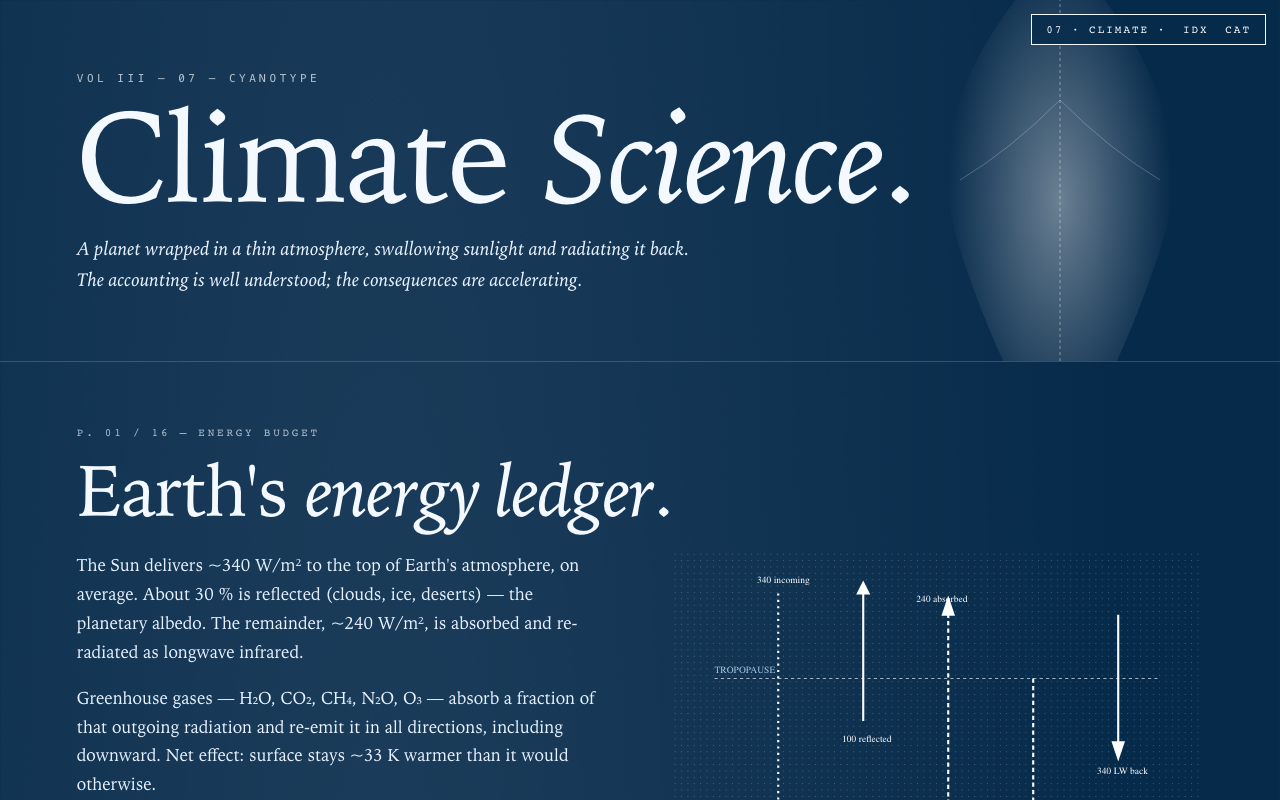
Climate Science

A planet wrapped in a thin atmosphere, swallowing sunlight and radiating it back. The accounting is well understood; the consequences are accelerating.

Science30 slides

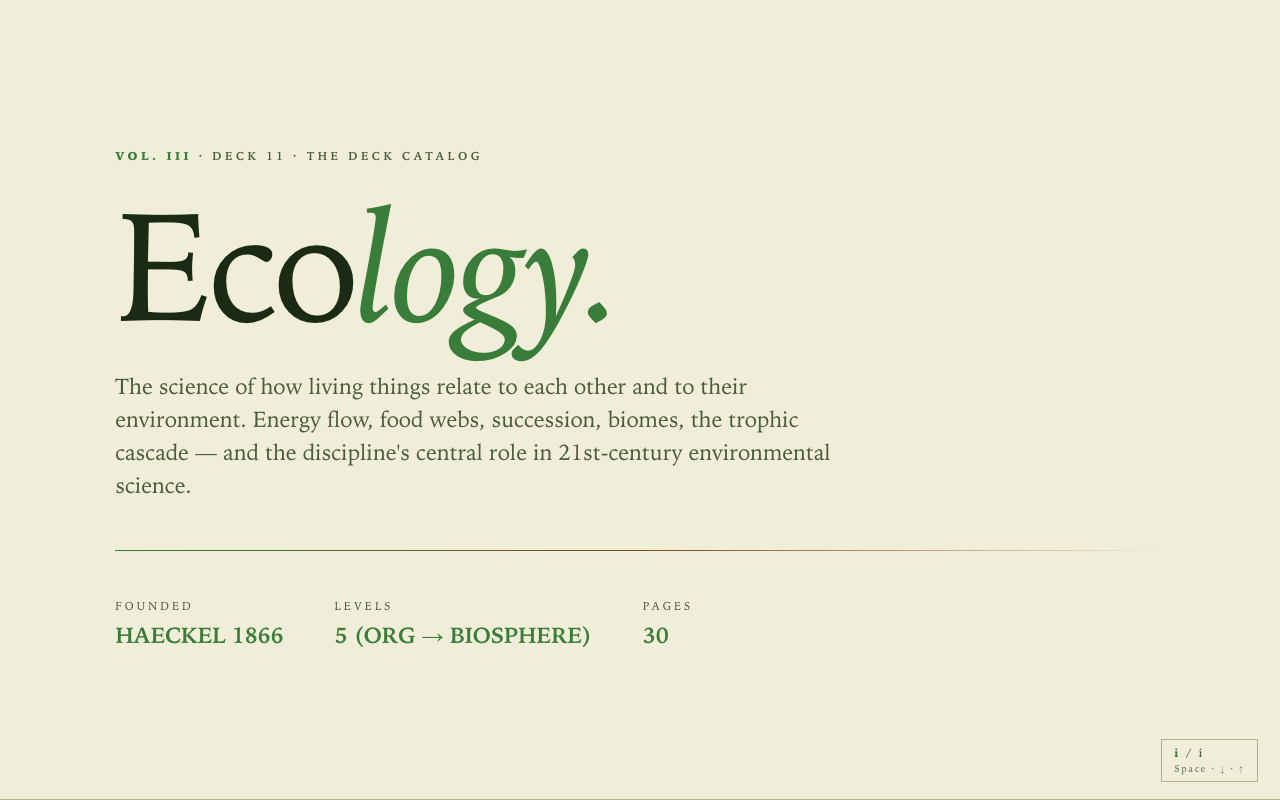
Ecology

The study of relationships — between organisms, between organisms and their environment, between species and the abiotic conditions that make life possible.

Science30 slides

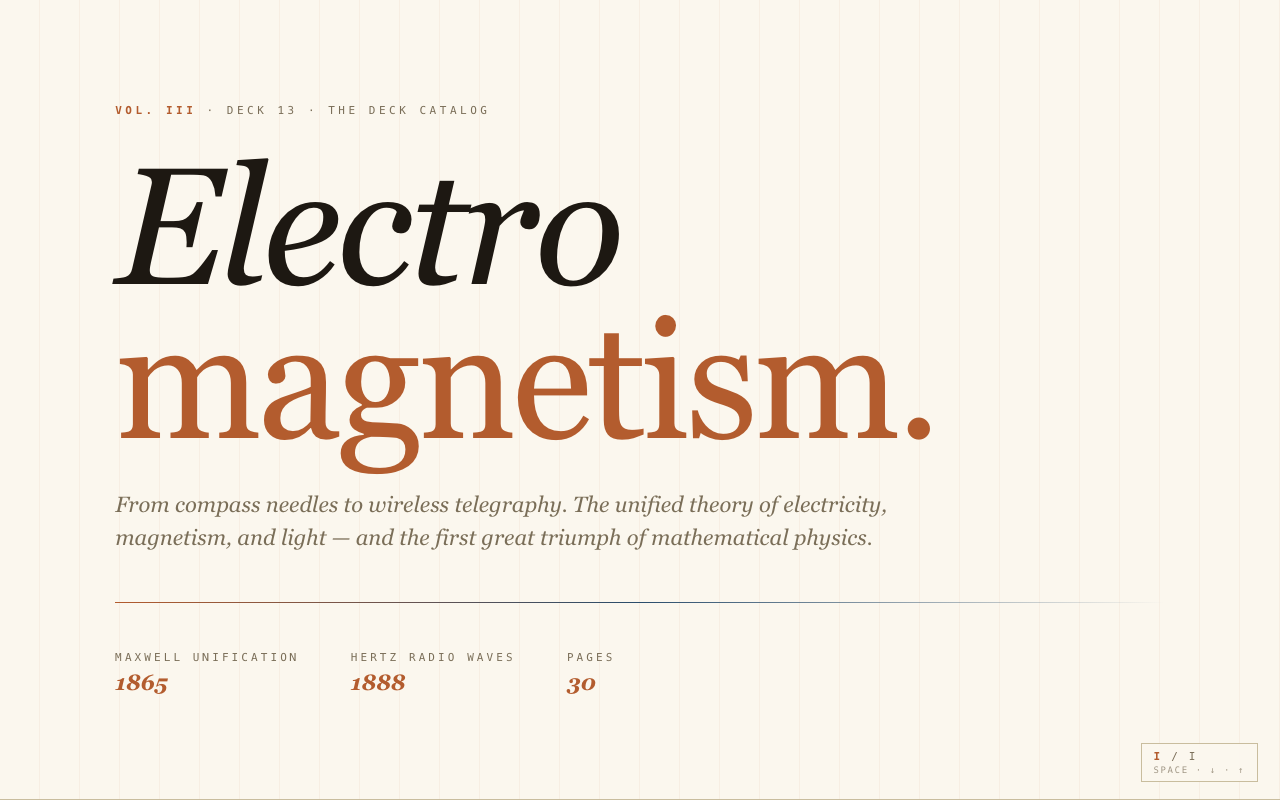
Electromagnetism

Electricity and magnetism look like separate phenomena. They are not. Maxwell's 1865 paper showed they are aspects of one field — and that field's waves travel at exactly the speed of light. Light, then, is electromagnetism.

Science17 slides

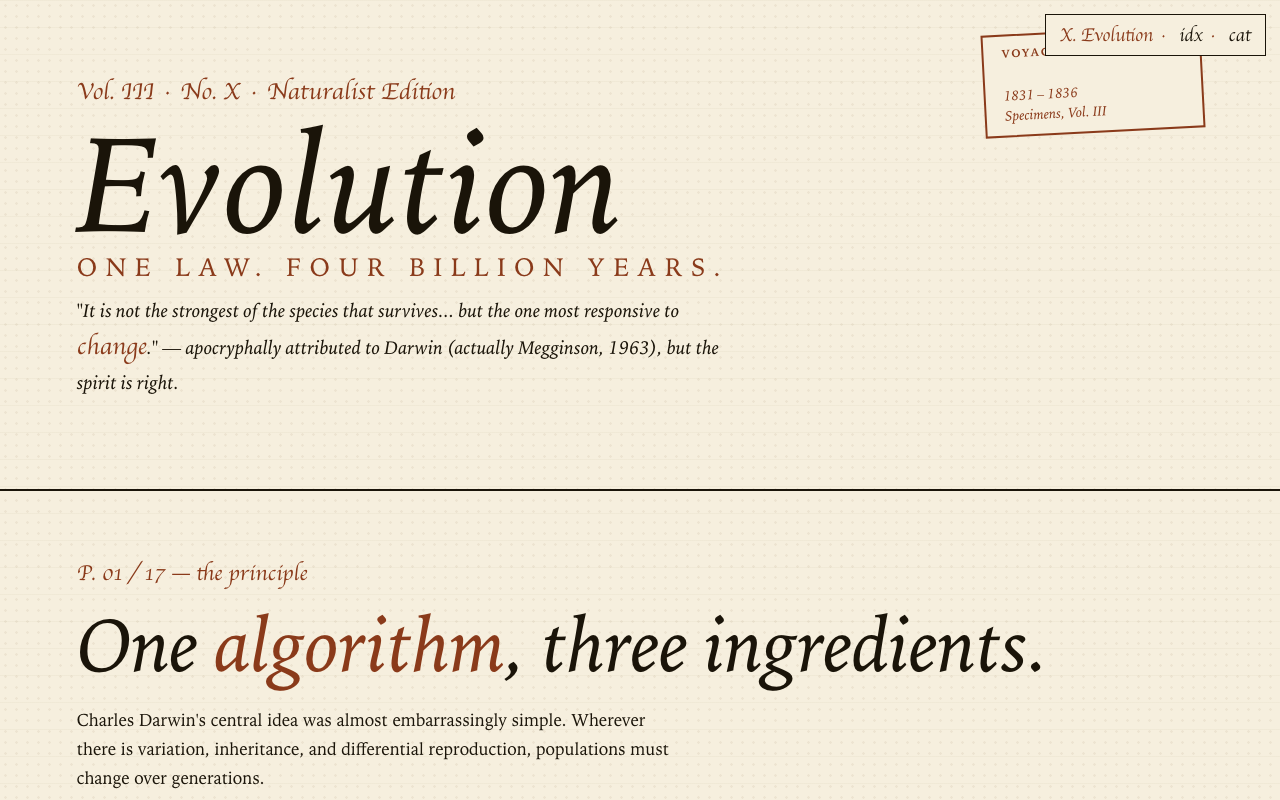
Evolution

"It is not the strongest of the species that survives... but the one most responsive to change ." — apocryphally attributed to Darwin (actually Megginson, 1963), but the spirit is right.

Science17 slides

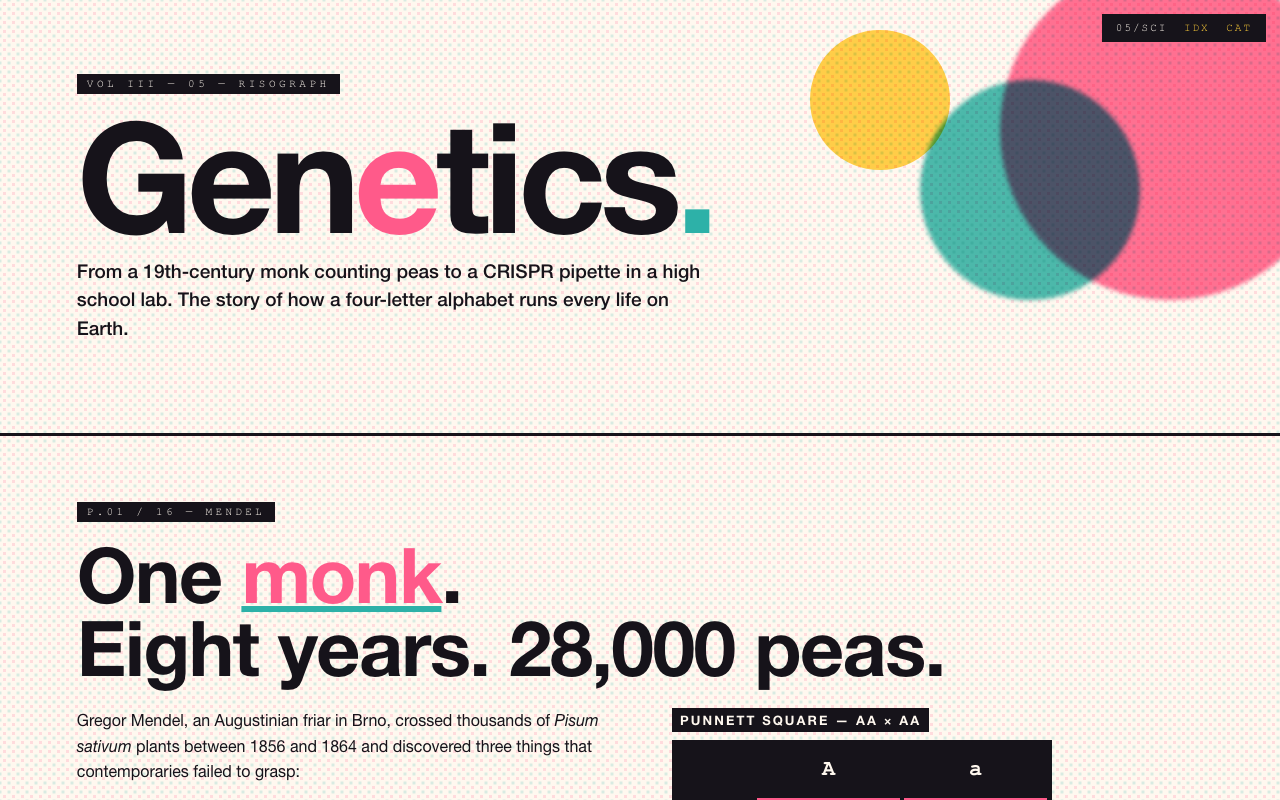
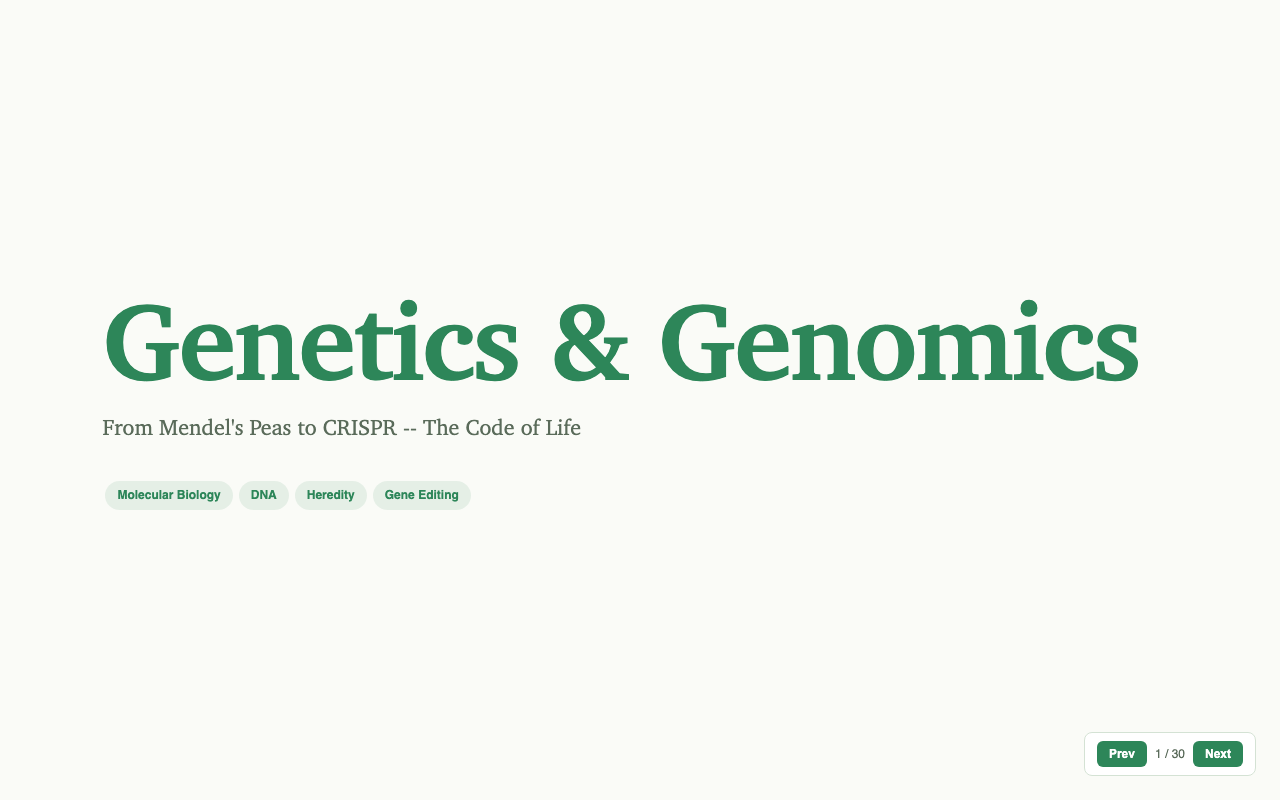
Genetics

From a 19th-century monk counting peas to a CRISPR pipette in a high school lab. The story of how a four-letter alphabet runs every life on Earth.

Science16 slides

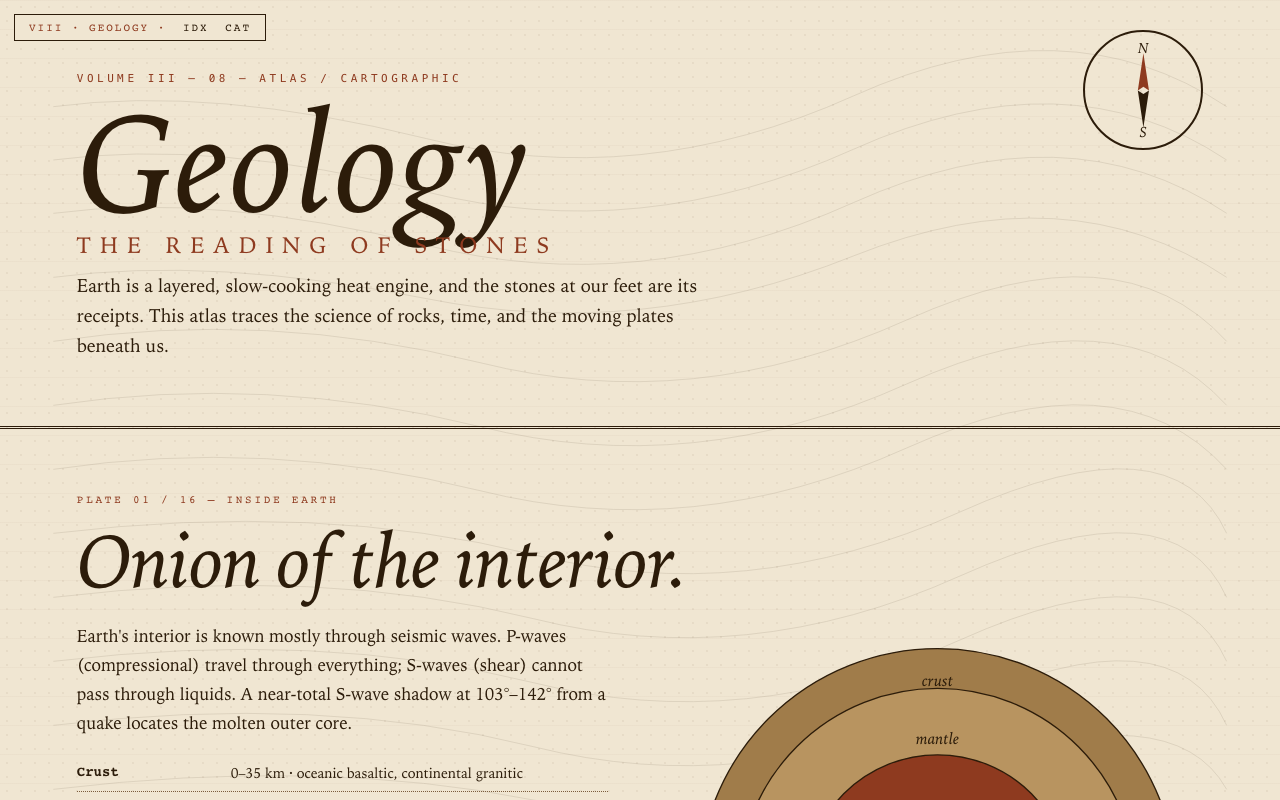
Geology

Earth is a layered, slow-cooking heat engine, and the stones at our feet are its receipts. This atlas traces the science of rocks, time, and the moving plates beneath us.

Science32 slides

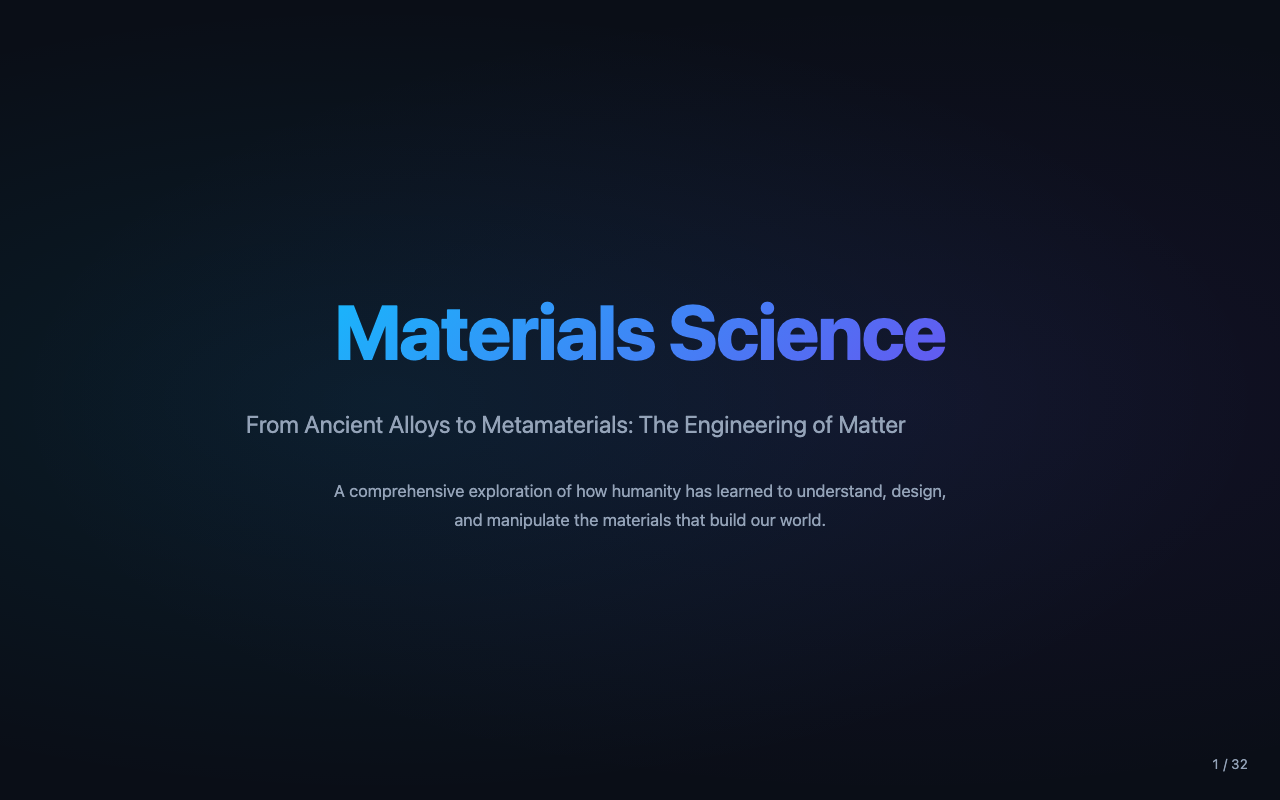
Materials Science

From Ancient Alloys to Metamaterials: The Engineering of Matter

Science15 slides

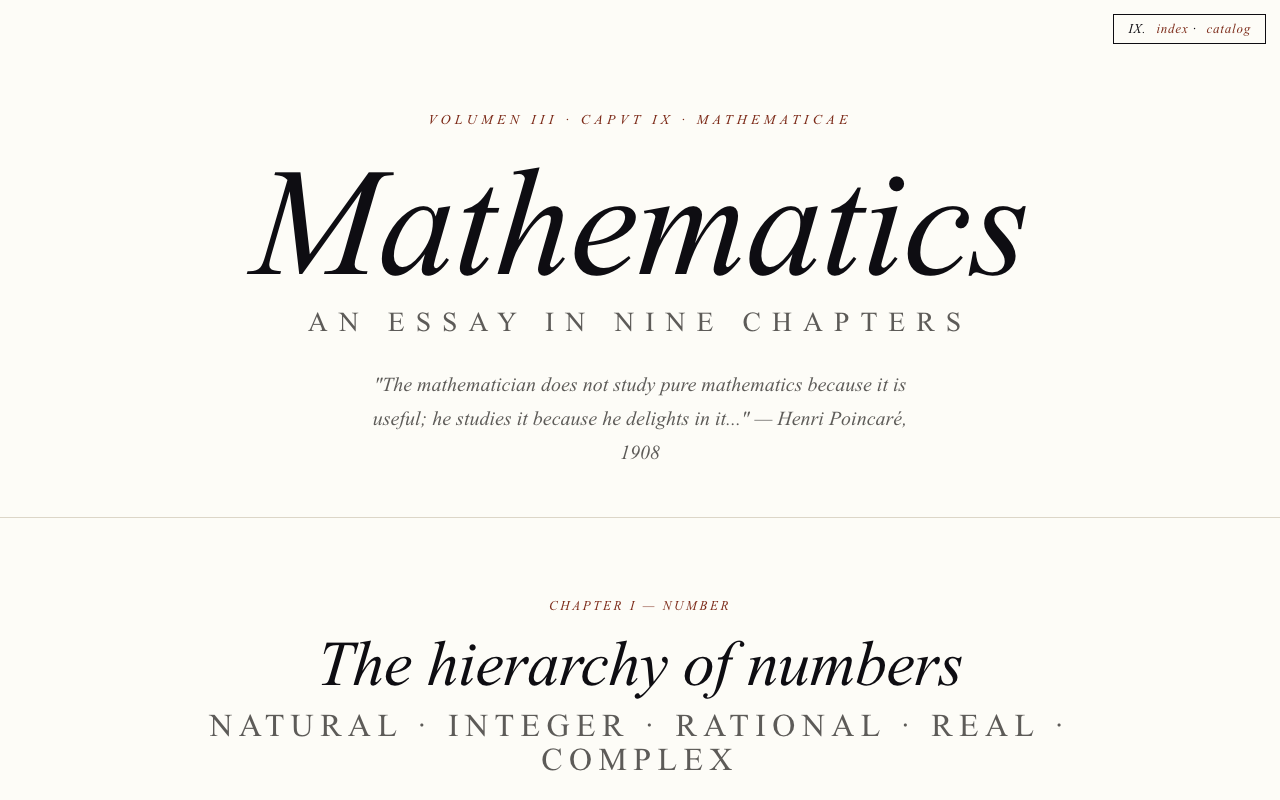
Mathematics

"The mathematician does not study pure mathematics because it is useful; he studies it because he delights in it..." — Henri Poincaré, 1908

Science17 slides

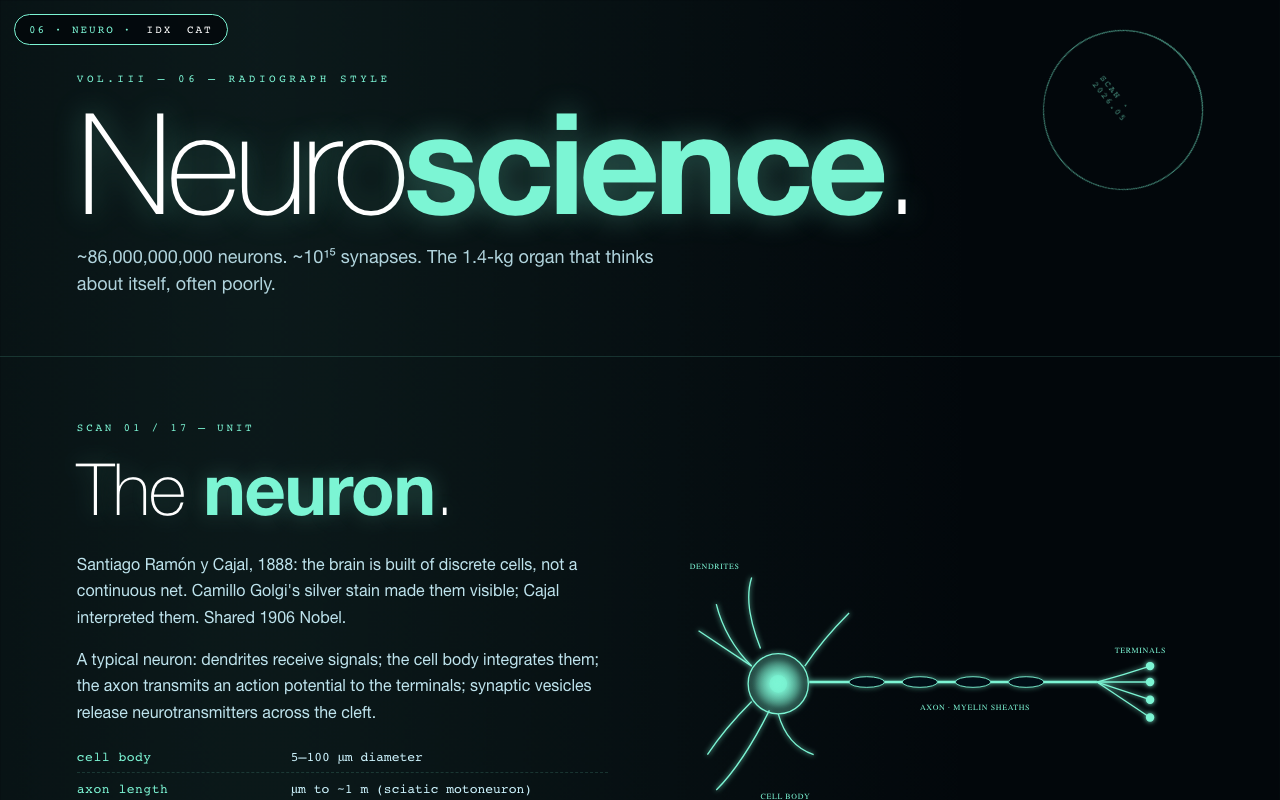
Neuroscience

~86,000,000,000 neurons. ~10¹⁵ synapses. The 1.4-kg organ that thinks about itself, often poorly.

Science32 slides

Oceanography

Exploring Earth's Last Frontier: The Science of Our Oceans

Science18 slides

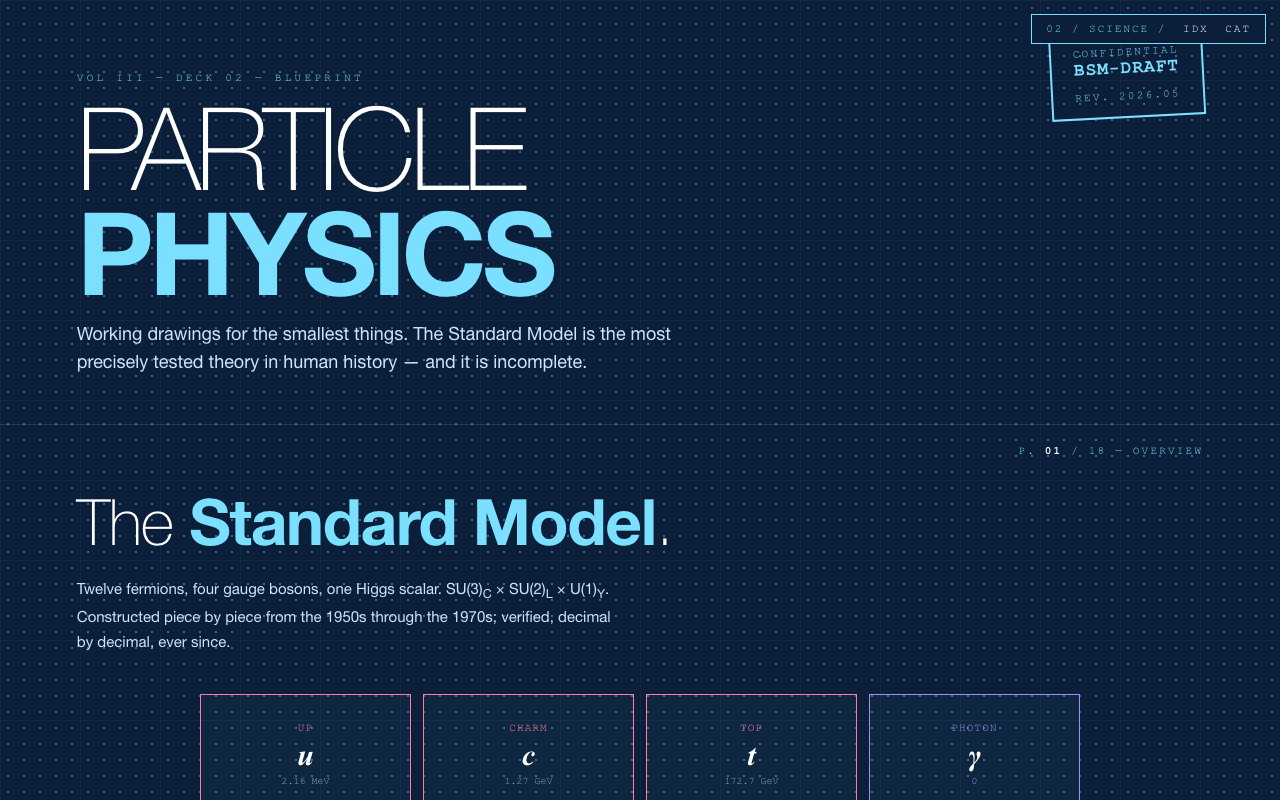
Particle Physics

Working drawings for the smallest things. The Standard Model is the most precisely tested theory in human history — and it is incomplete.

Science30 slides

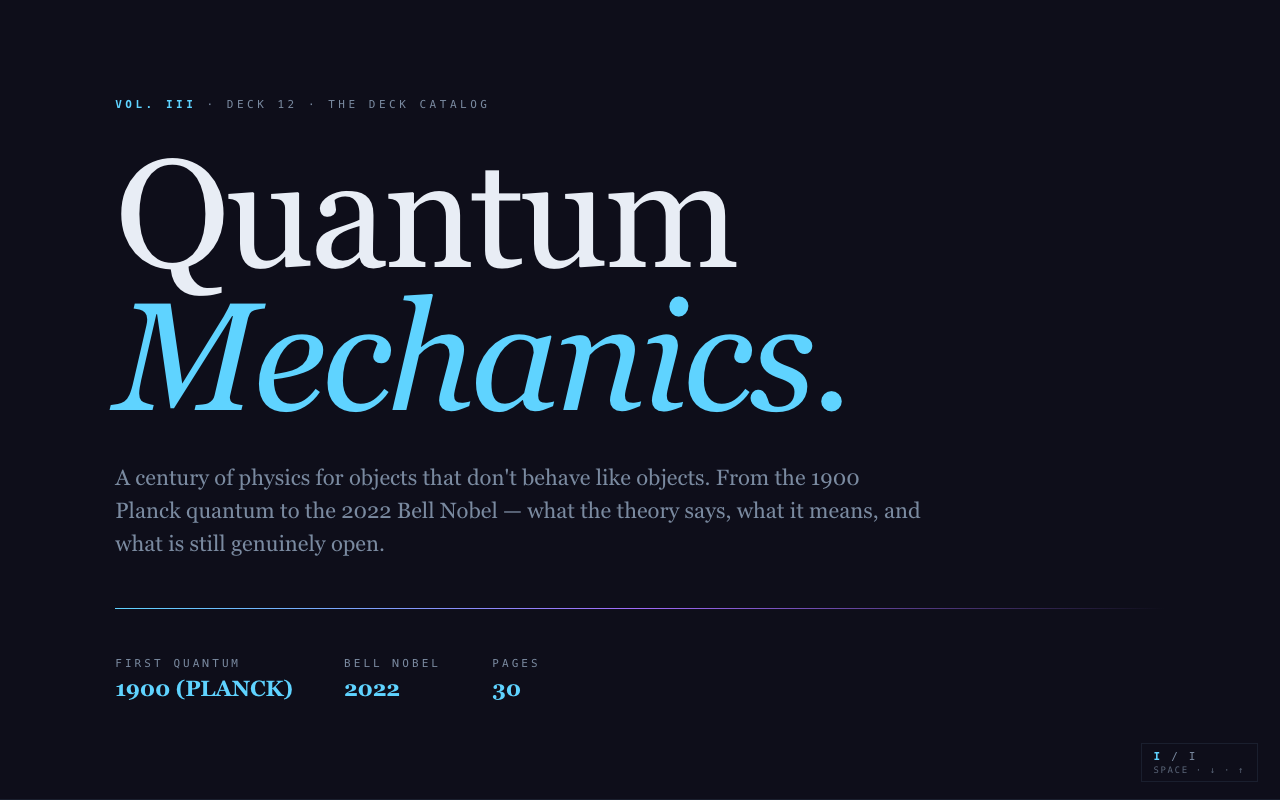
Quantum Mechanics

The mathematical theory that correctly predicts the behaviour of atoms, molecules, photons, and everything built from them. Also: a philosophical mess.

Science32 slides

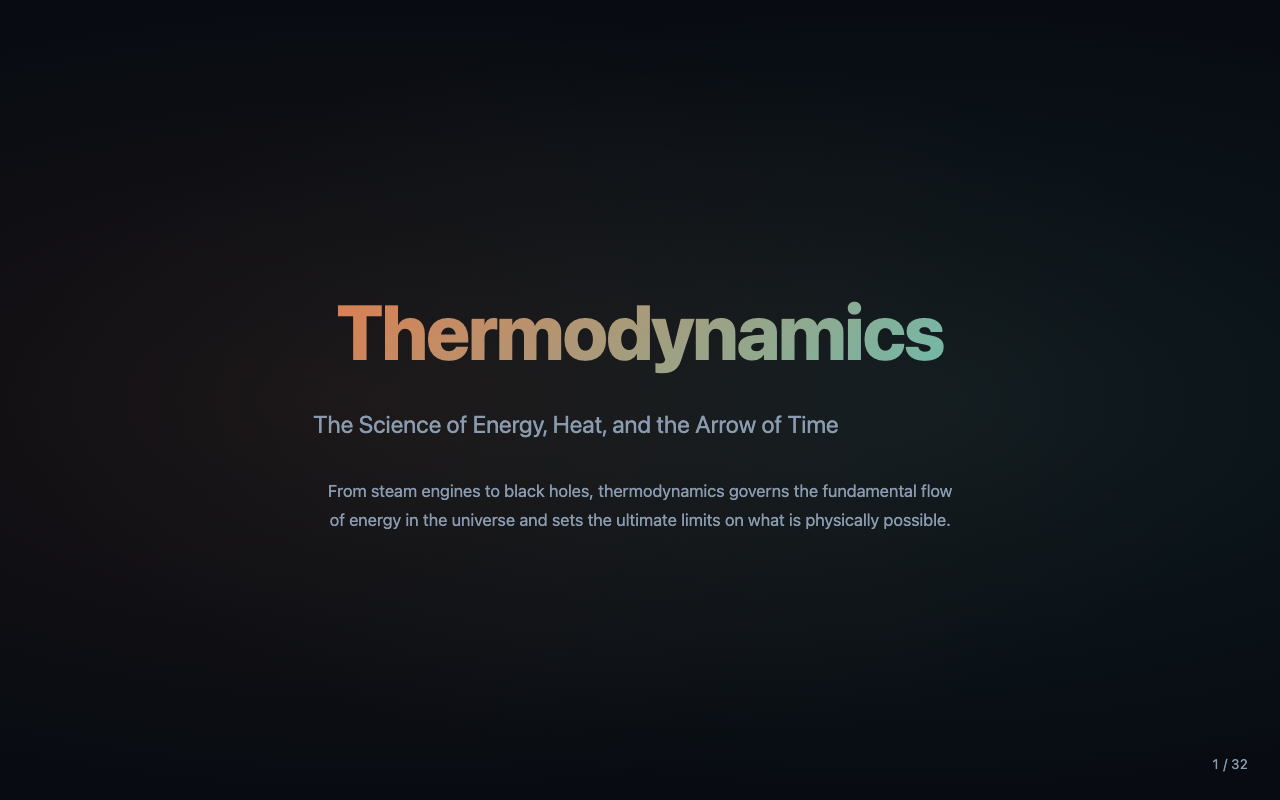
Thermodynamics

The Science of Energy, Heat, and the Arrow of Time

Science13 slides

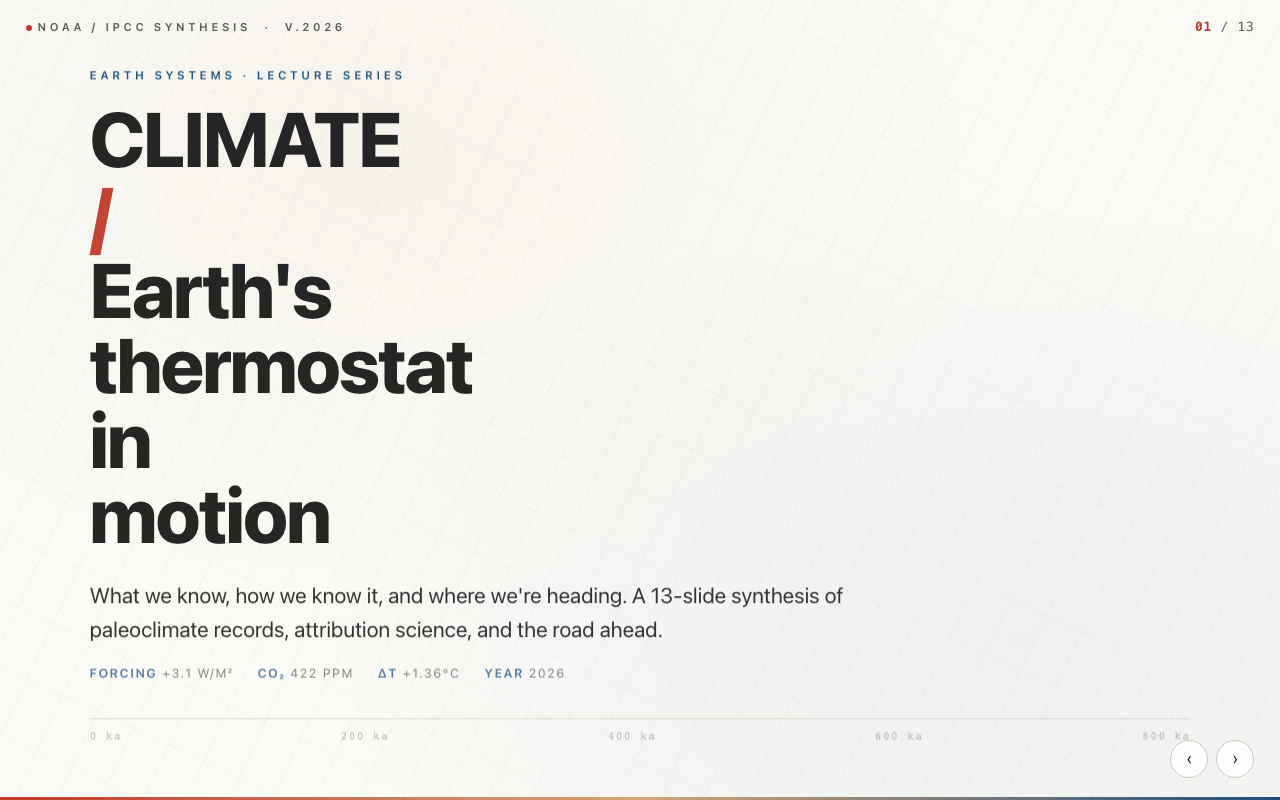
CLIMATE / Earth's thermostat in motion

What we know, how we know it, and where we're heading. A 13-slide synthesis of paleoclimate records, attribution science, and the road ahead.

Science13 slides

Cosmology / 13.8 billion years, briefly

A short tour of everything that has ever happened — from a singularity smaller than a proton to a thin, cold sea of photons drifting through eternity.

Science14 slides

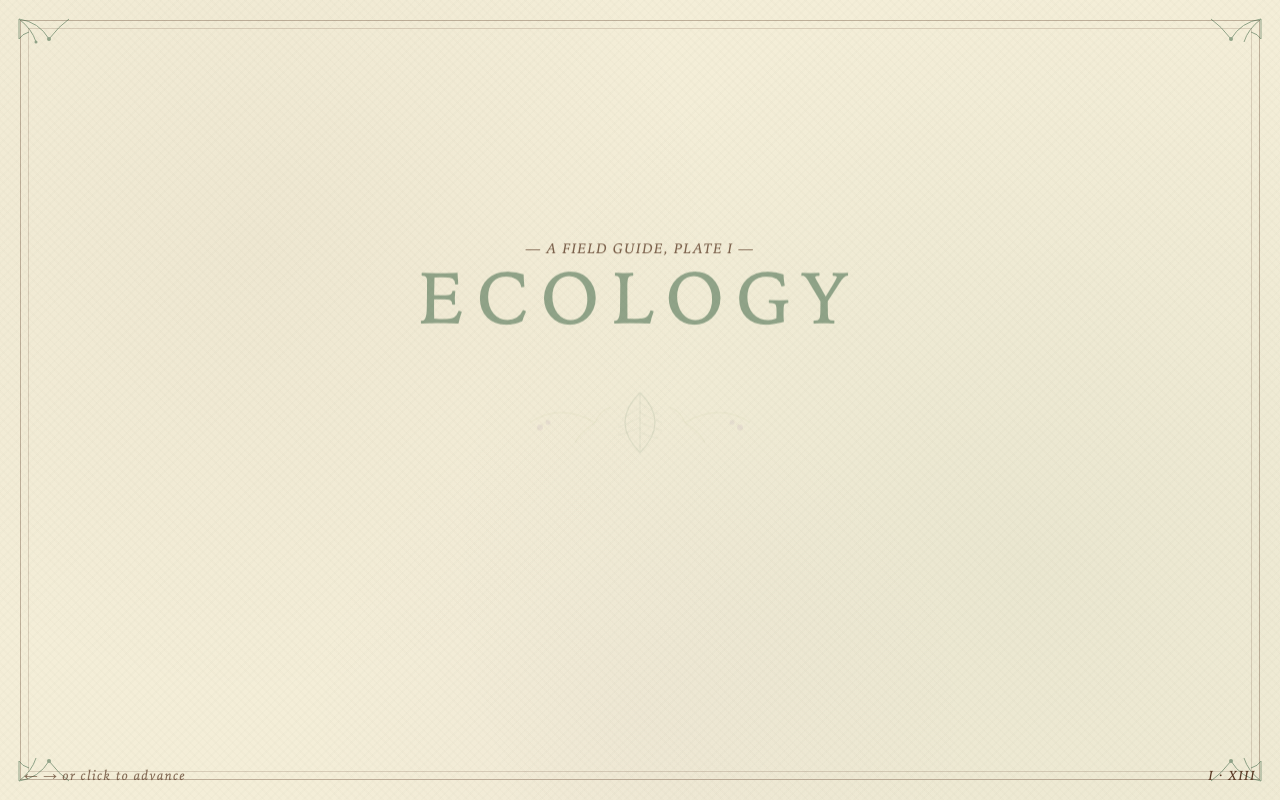
Ecology / Webs of Dependence

— A FIELD GUIDE, PLATE I — ECOLOGY Webs of Dependence Thirteen Plates · on Living Systems Plate II Levels of Organization from a single being to the living Earth organism A single living individual — one oak, one robin, one hyphal strand of fungus. population All members of one species inhabiting a defined place at a defined time. community All populations interacting in the same locality — predators, prey...

Science13 slides

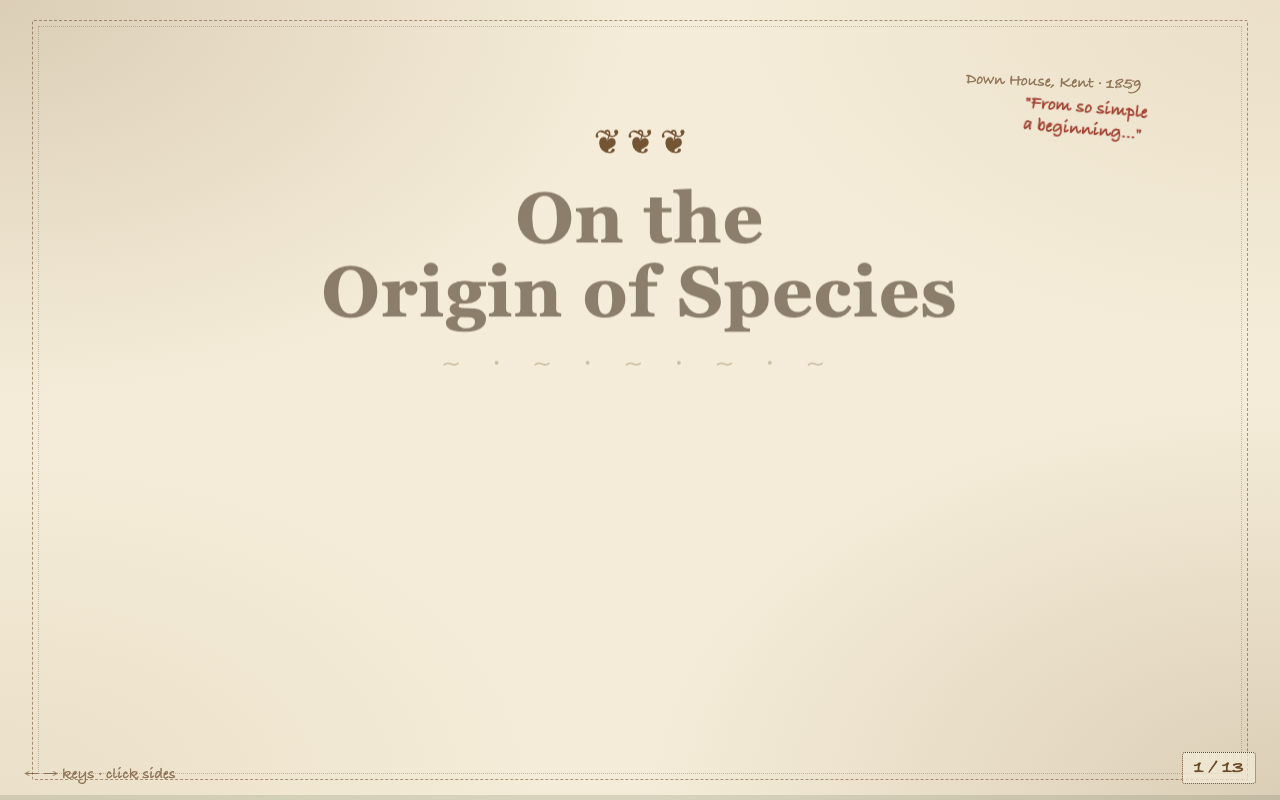
On the Origin of Species — A Field Notebook

evolution by natural selection

Science13 slides

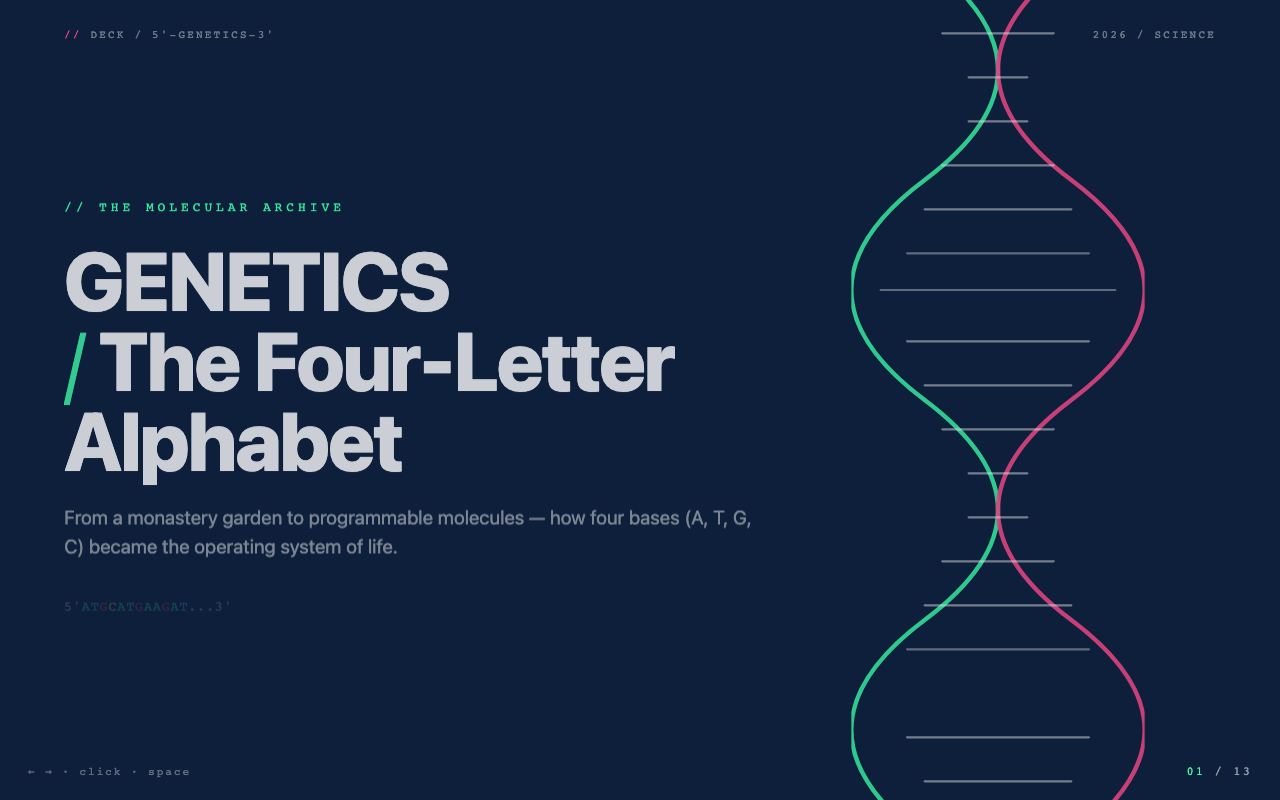
Genetics & DNA — Mendel to CRISPR

DECK / 5'-GENETICS-3' 2026 / SCIENCE // THE MOLECULAR ARCHIVE GENETICS / The Four-Letter Alphabet From a monastery garden to programmable molecules — how four bases (A, T, G, C) became the operating system of life.

Science13 slides

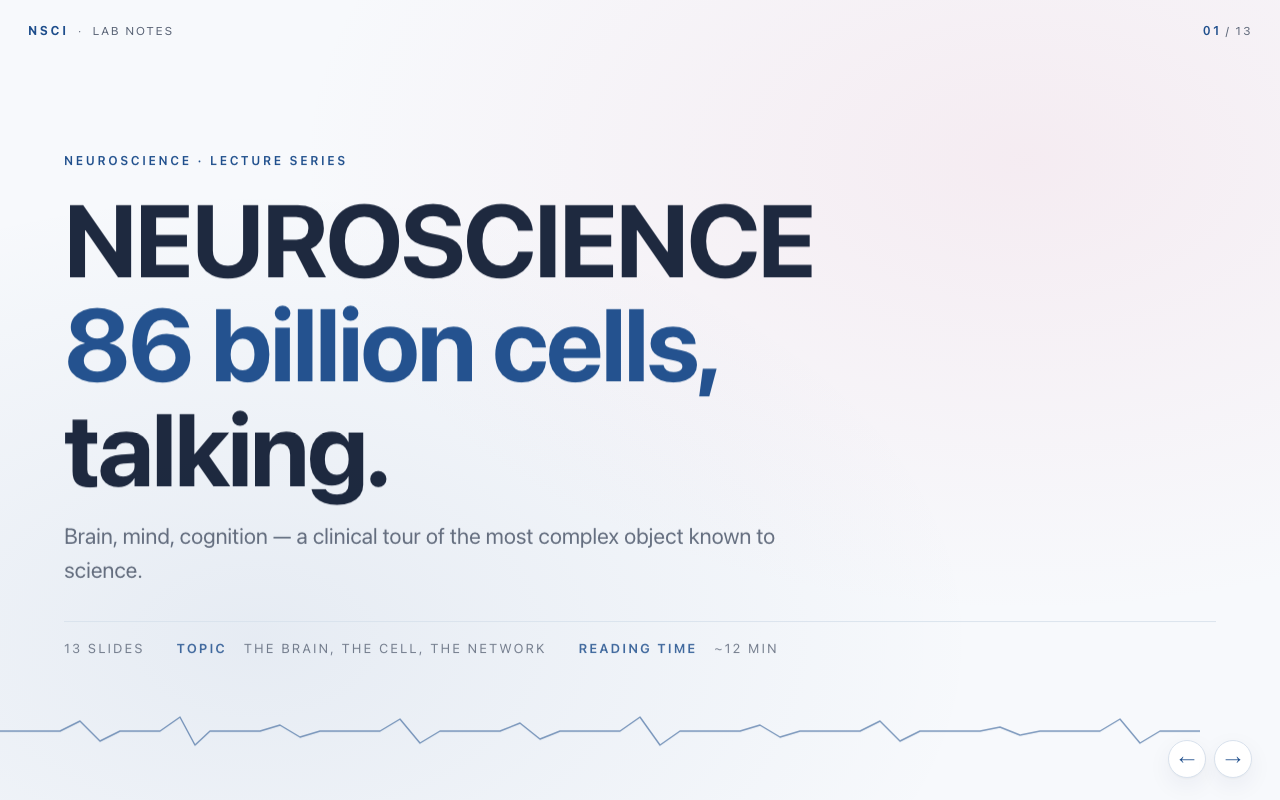
Neuroscience / 86 billion cells, talking

Brain, mind, cognition — a clinical tour of the most complex object known to science.

Science14 slides

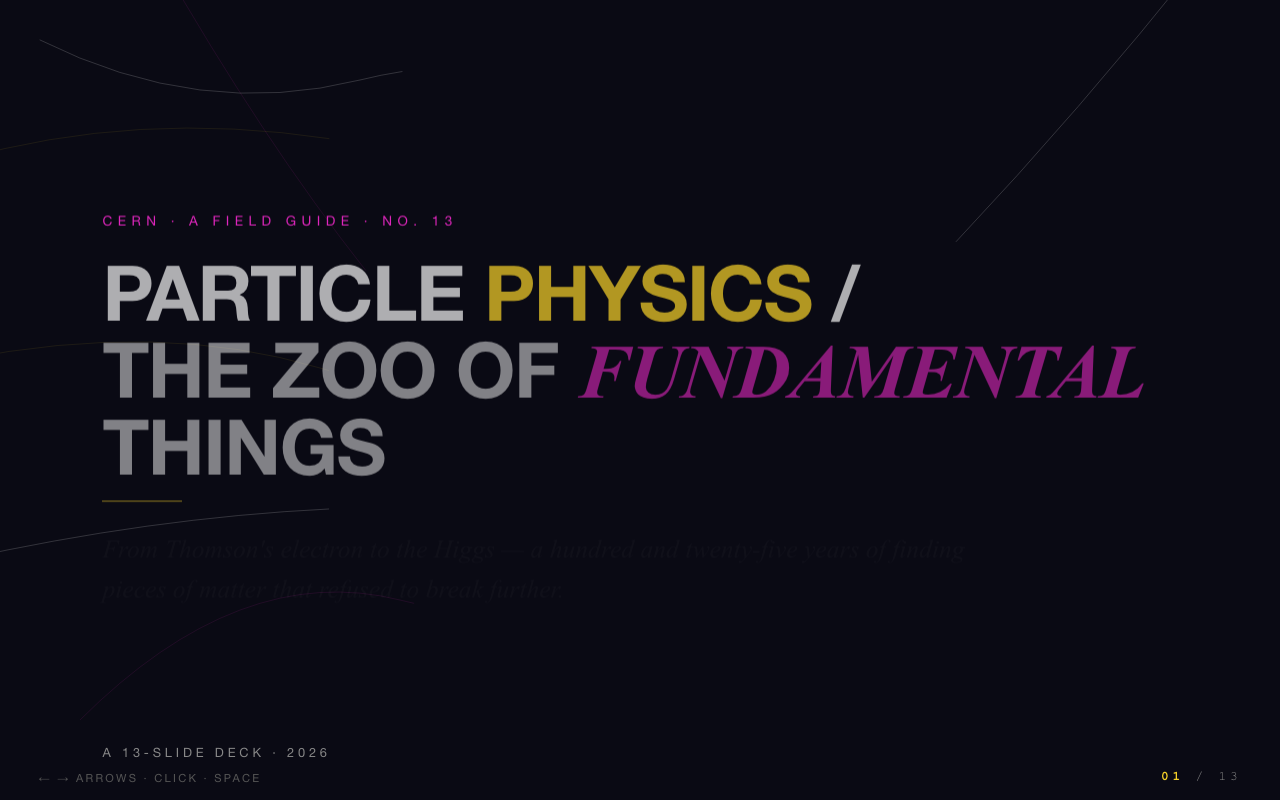
Particle Physics — The Zoo of Fundamental Things

CERN · A Field Guide · No. 13 Particle Physics / The zoo of fundamental things From Thomson's electron to the Higgs — a hundred and twenty-five years of finding pieces of matter that refused to break further.

Science13 slides

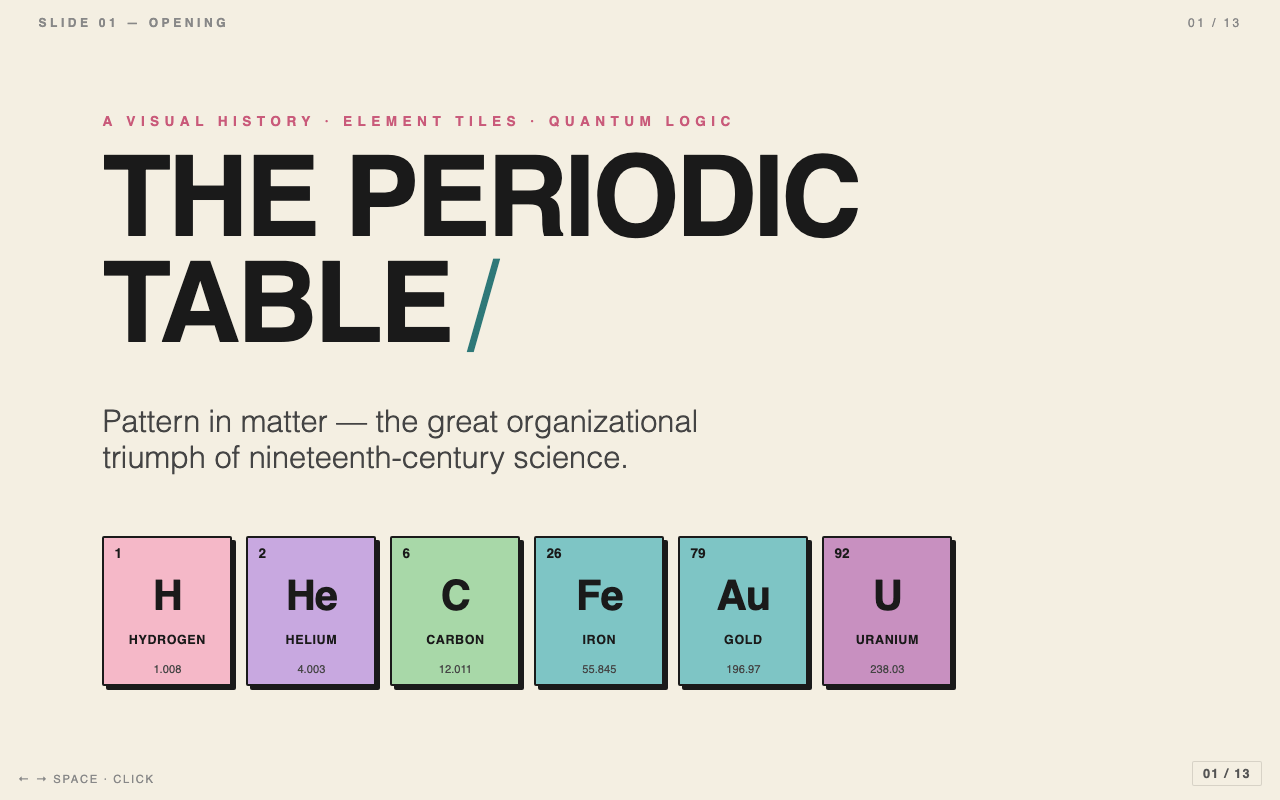
The Periodic Table — Pattern in Matter

For most of history, "elements" meant earth, water, fire, air. The chemical revolution gave that scheme a final shove — and three thinkers laid the groundwork.

Science13 slides

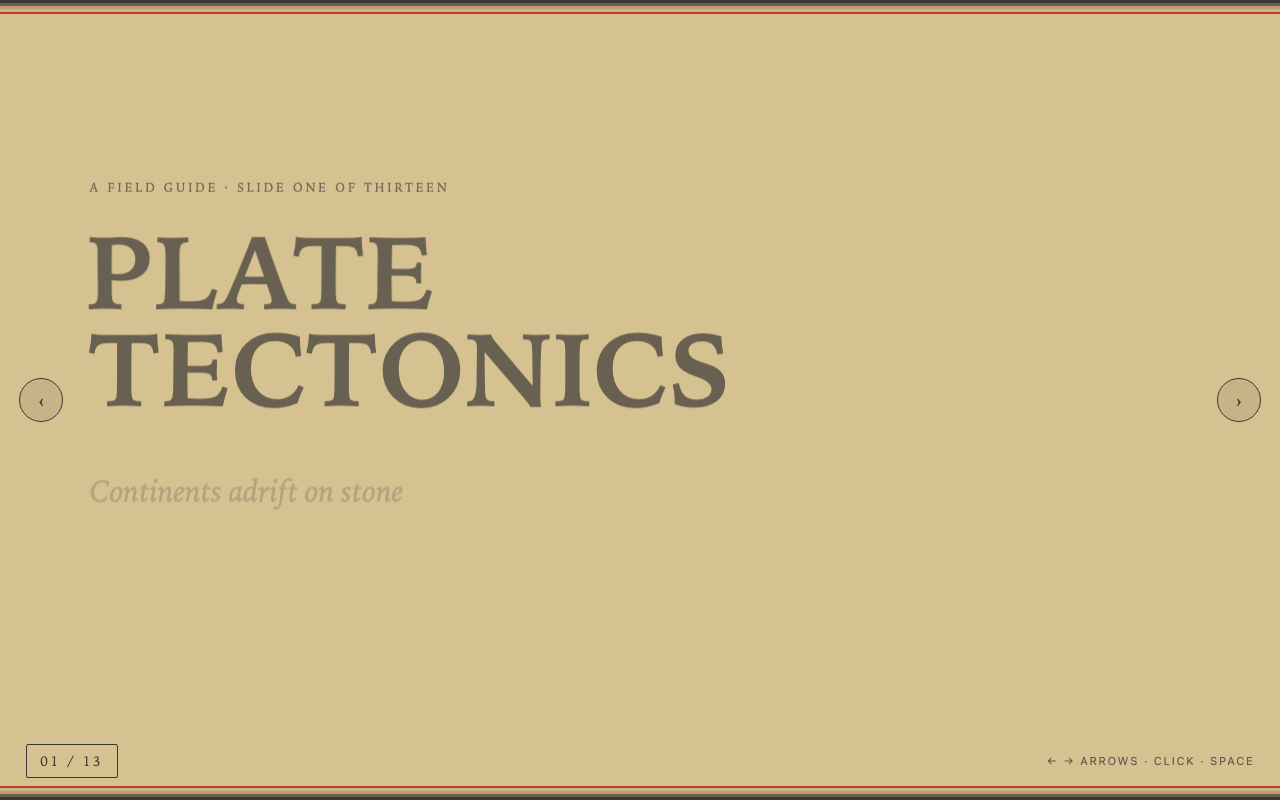
Plate Tectonics — Field Guide

Alfred Wegener, a German meteorologist, noticed that the coastlines of South America and Africa fit like puzzle pieces. Matching fossils, glacial deposits, and rock formations on opposite Atlantic shores convinced him: continents move .

Science13 slides

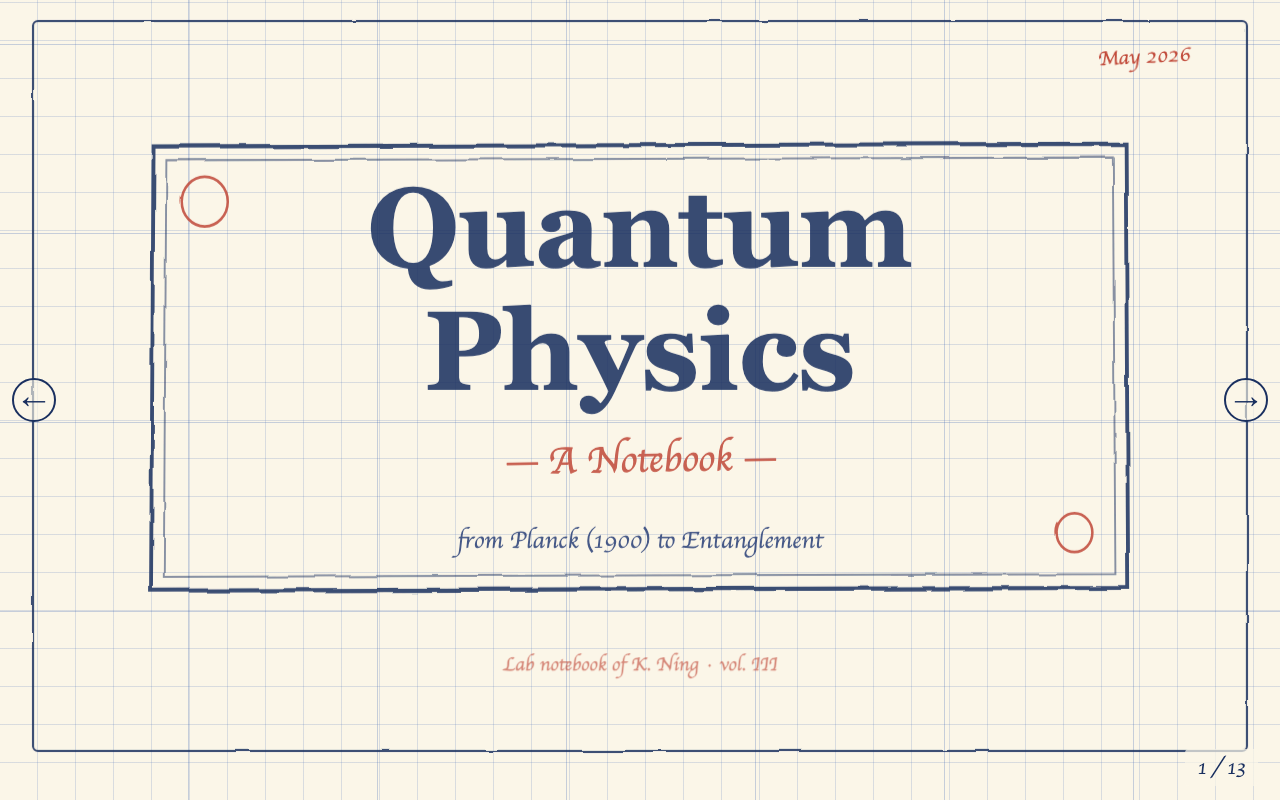
Quantum Physics — A Notebook

Quantum Physics — A Notebook — from Planck (1900) to Entanglement