shipslides
Examples/Geography
Vol. XIV / 17 decks

Geography

Maps, places, landscapes, regions, urban form, borders, climate zones, and human terrain. Browse curated, sandboxed HTML presentation decks in Geography, each with crawlable summaries, slide outlines, and topic metadata.

17
Decks
519
Slides

Geography presentation hub

This collection gathers sandboxed HTML presentation decks for readers who want structured, visual introductions instead of a static document. Each indexed deck includes a summary, slide outline, topics, and a standalone viewer link when the deck passes the editorial quality gate.
Geography32 slides

Africa

Every human alive has African ancestors. The genetic, fossil and archaeological record agree: Homo sapiens emerged in Africa around 300,000 years ago, and a small population that left between 70,000 and 60,000 years ago is the source of every non-African human.

Geography32 slides

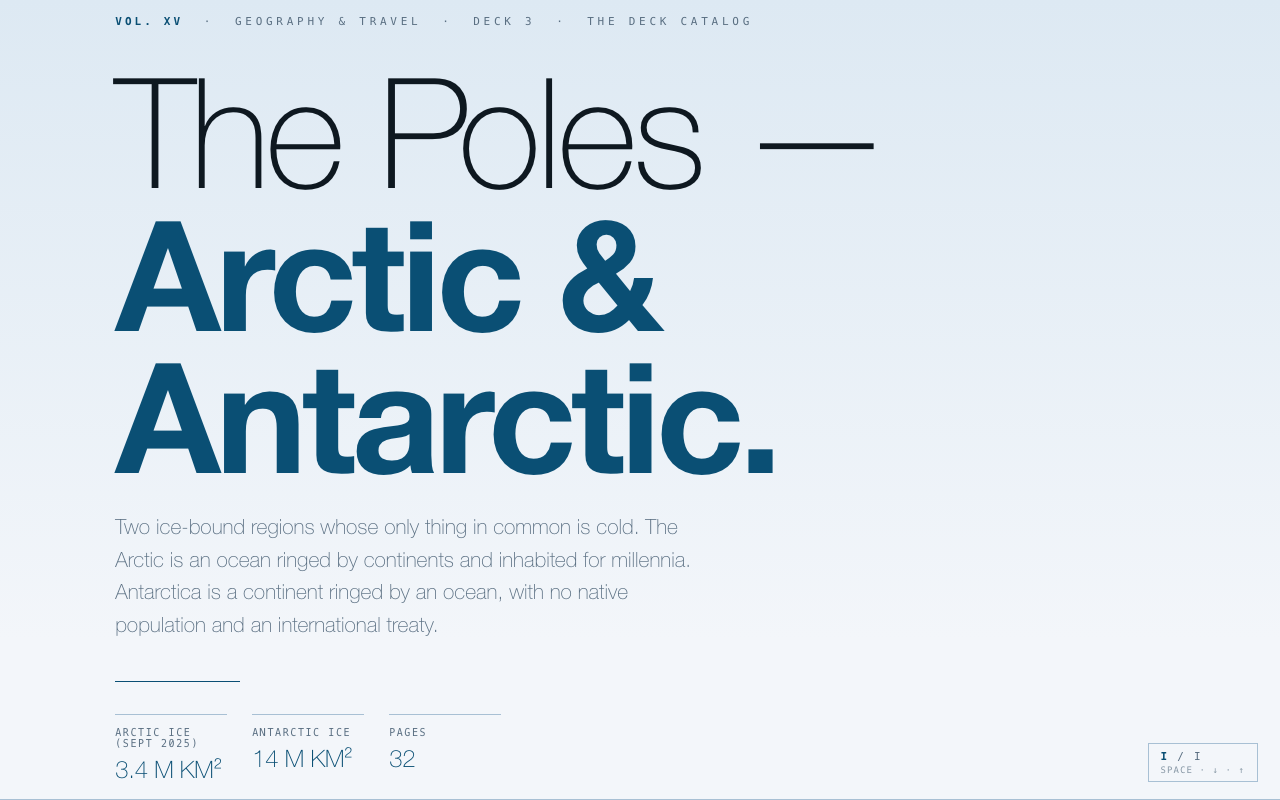
The Poles

The Arctic and Antarctic are not mirror images. The Arctic is a sea surrounded by land; the Antarctic is land surrounded by sea. The asymmetry shapes everything — the climate, the wildlife, the human geography, and how each will respond to a warming world.

Geography30 slides

History of Cartography

From Clay Tablets to Satellite Imagery: Humanity's Quest to Map the World

Geography31 slides

Caves and Karst Landscapes

The Hidden World Beneath Our Feet

Geography25 slides

Climate Zones and Biomes

Earth's Living Mosaic

Geography30 slides

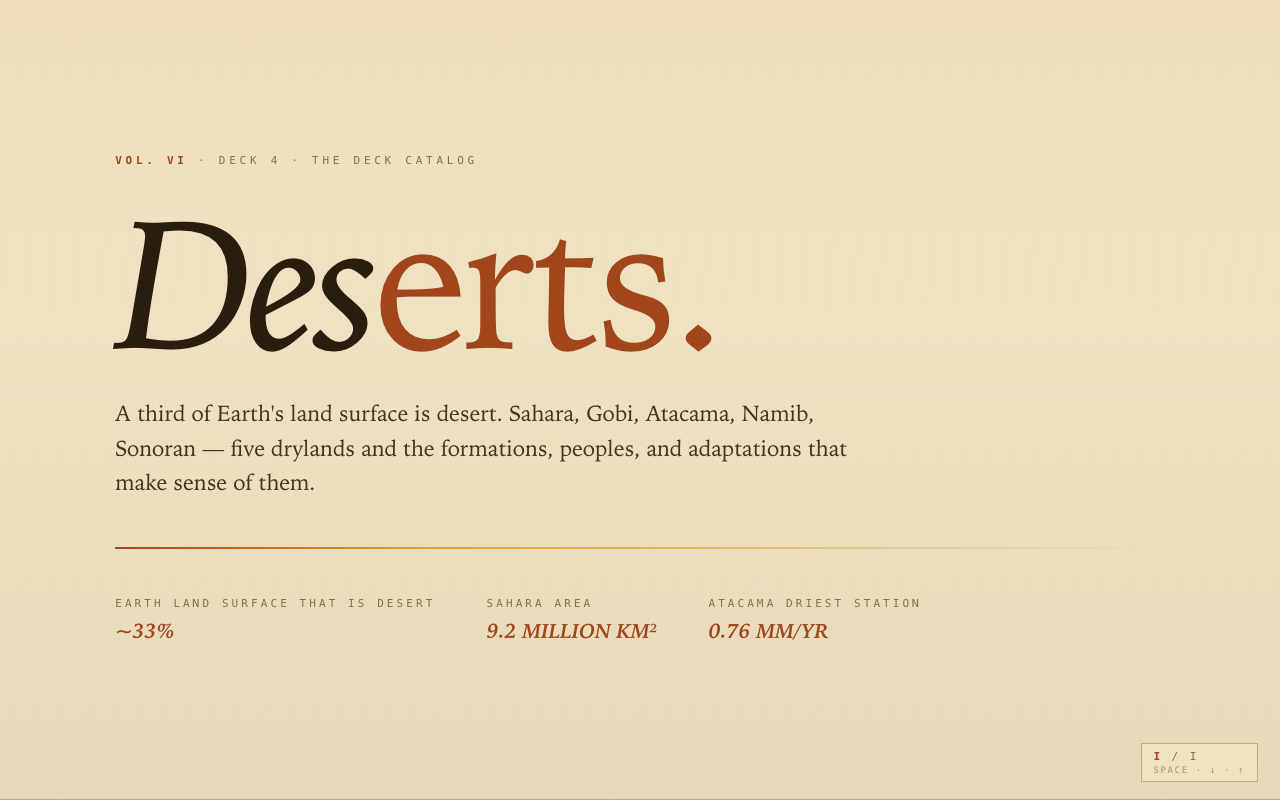
Deserts

Deserts are not failed landscapes. They are the parts of the planet where rainfall is too rare to support continuous vegetation — and the result is some of the most engineered, surveyed, and demographically distinctive country on Earth.

Geography39 slides

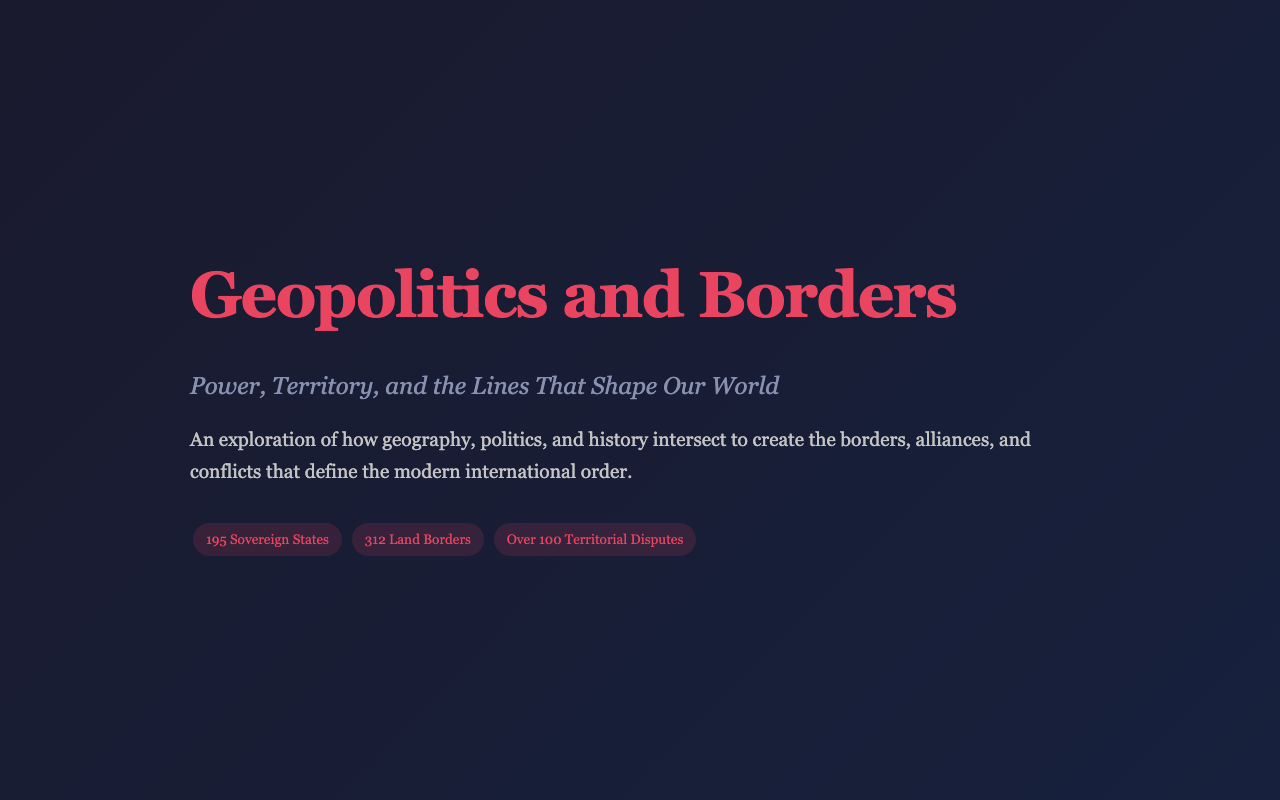
Geopolitics and Borders

Power, Territory, and the Lines That Shape Our World

Geography32 slides

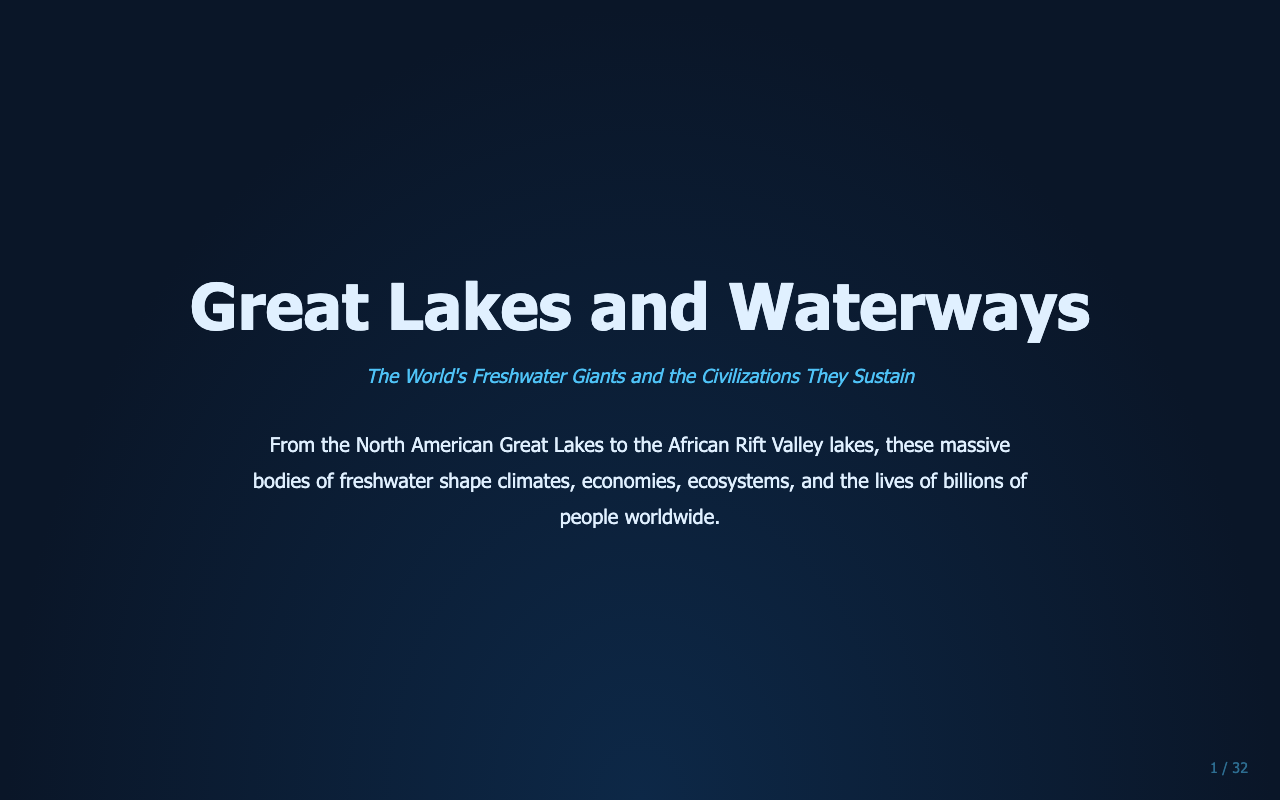
Great Lakes and Waterways

The World's Freshwater Giants and the Civilizations They Sustain

Geography30 slides

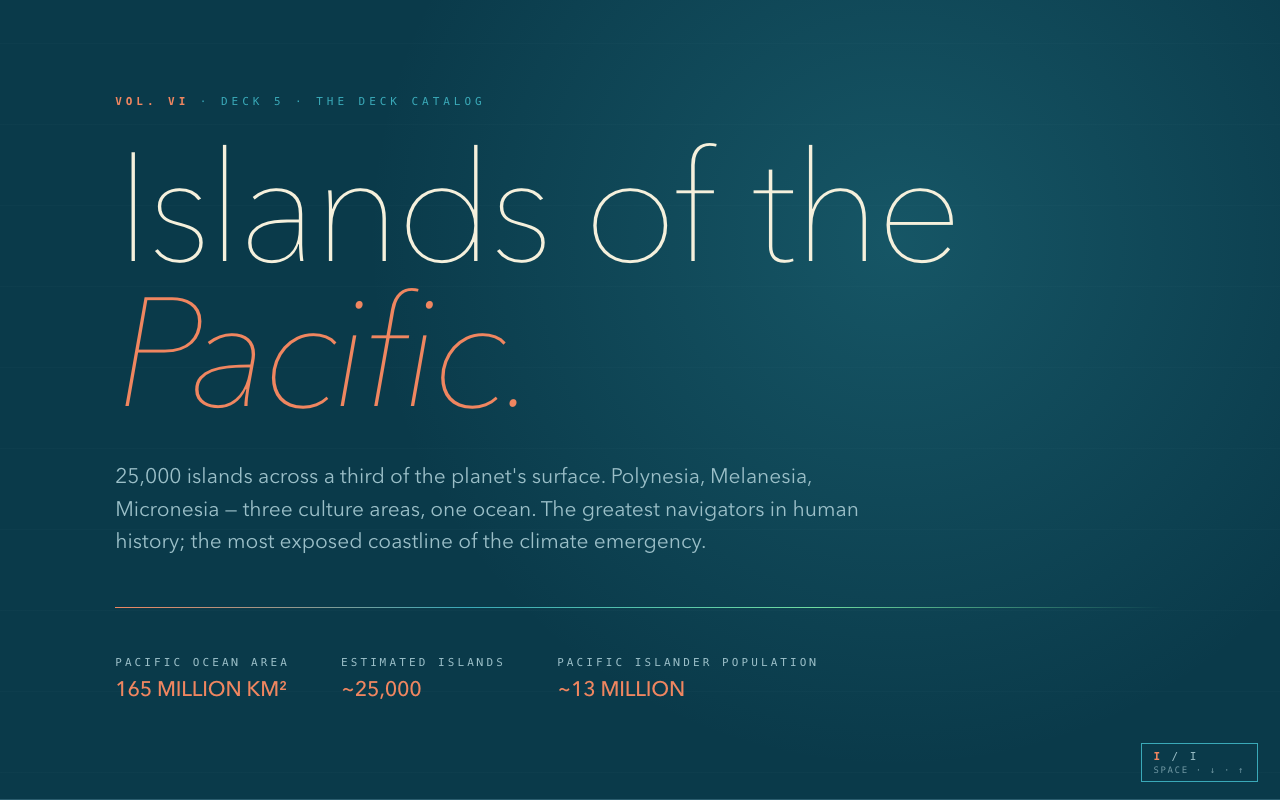
Islands of the Pacific

The Pacific is not water with islands in it. It is a continent of islands — settled, mapped, sailed, and governed by some of the most accomplished maritime peoples in history.

Geography30 slides

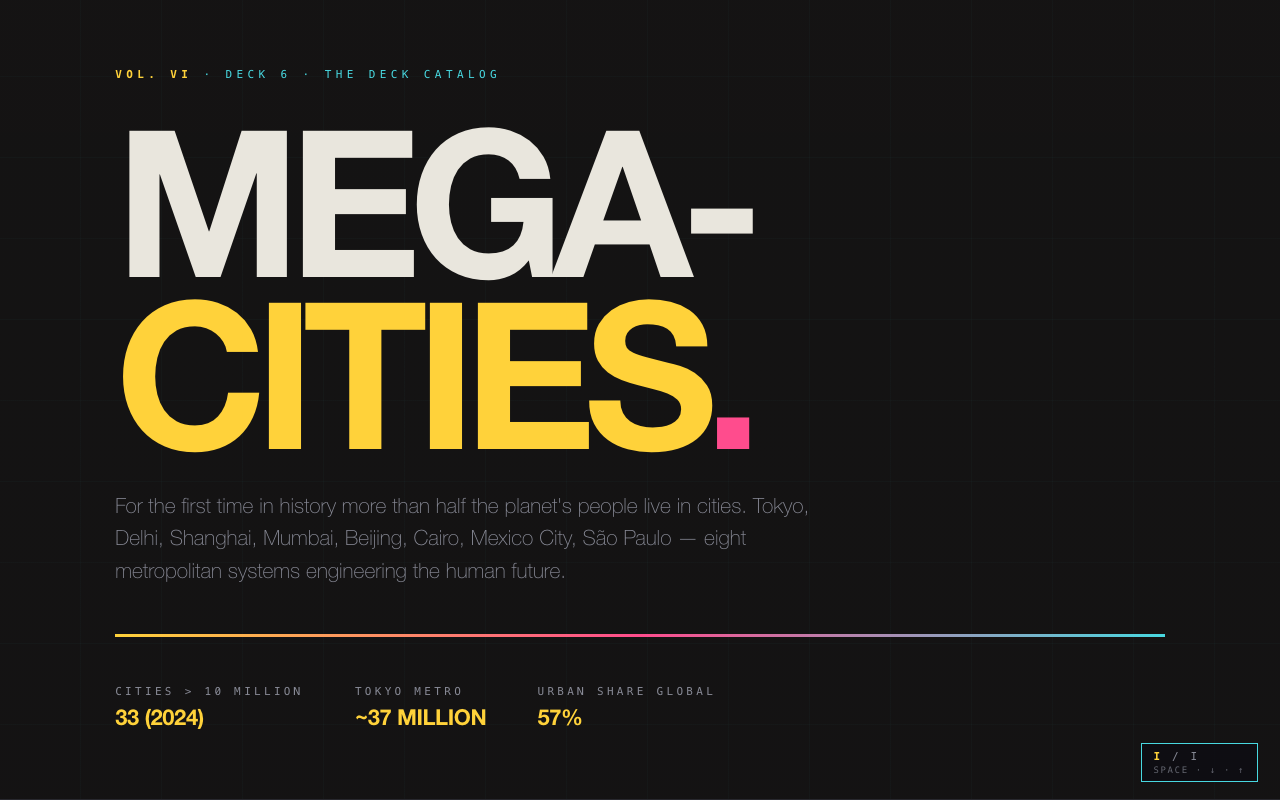
Mega-cities

In 1800 perhaps 3% of humanity lived in cities. In 1950 it was 30%. In 2024 it crossed 57%. By 2050, on UN projections, it will be 68%. The 21st century is being built in megacities.

Geography30 slides

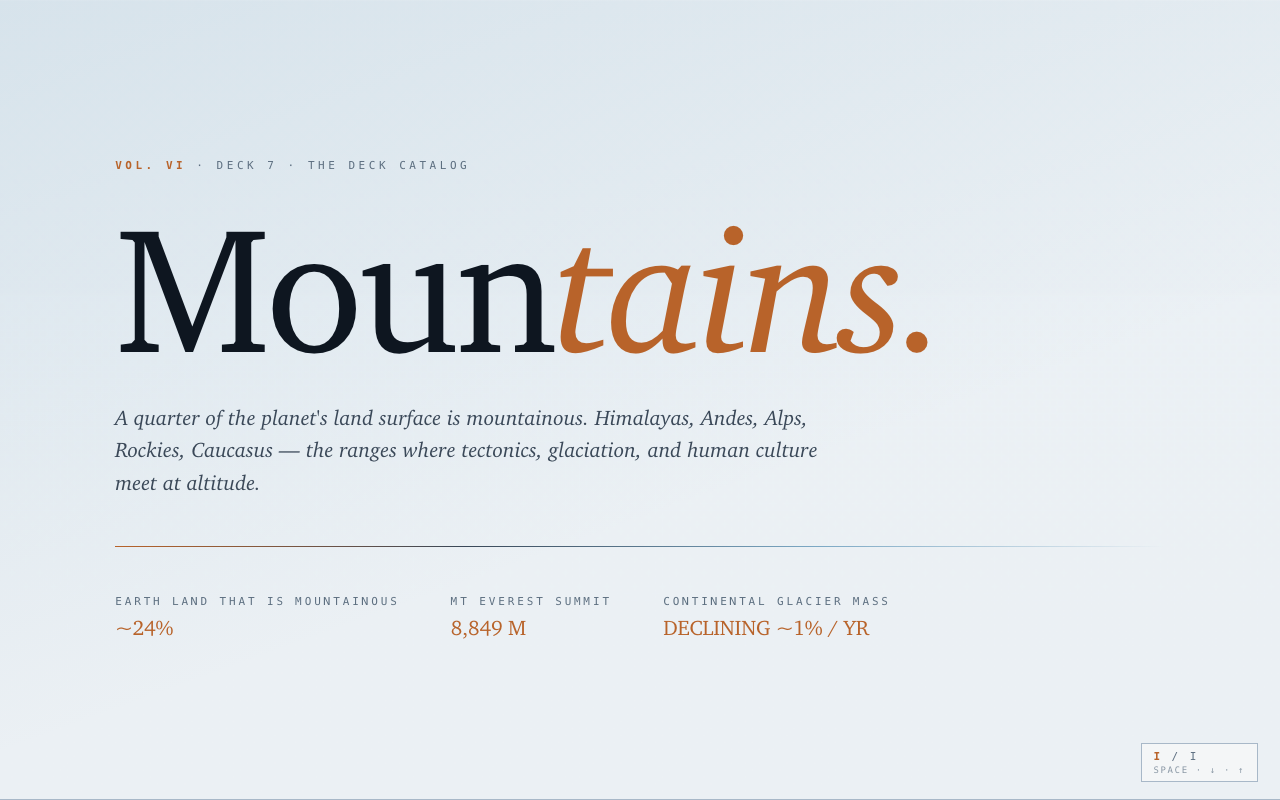
Mountains

Mountains are slow-motion catastrophes — pieces of Earth's crust still rising and breaking apart, populated by people who have learned to live on slopes the rest of us would call uninhabitable.

Geography30 slides

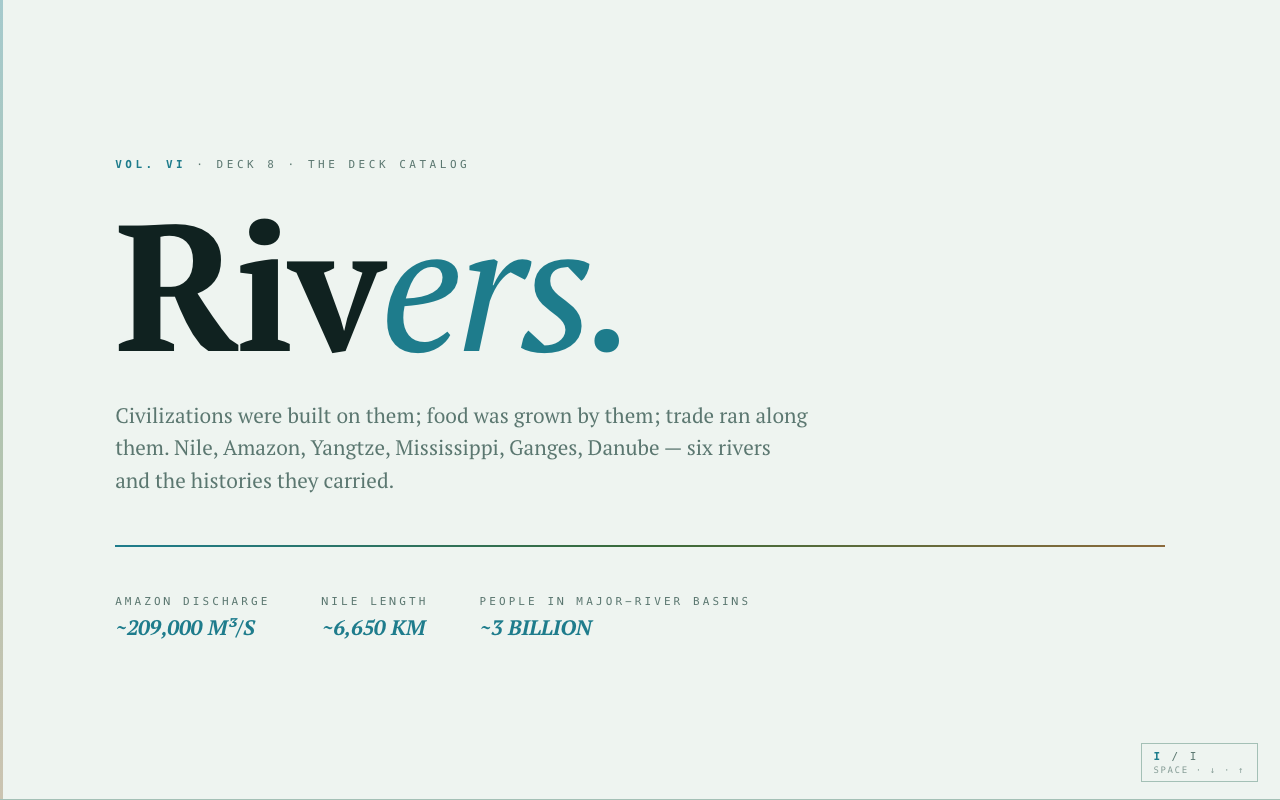
Rivers

Every great pre-modern civilization lived on a river. Not most. All. The Nile, the Tigris-Euphrates, the Indus, the Yellow, the Yangtze, the Ganges — these are not coincidences. They are the prerequisite.

Geography30 slides

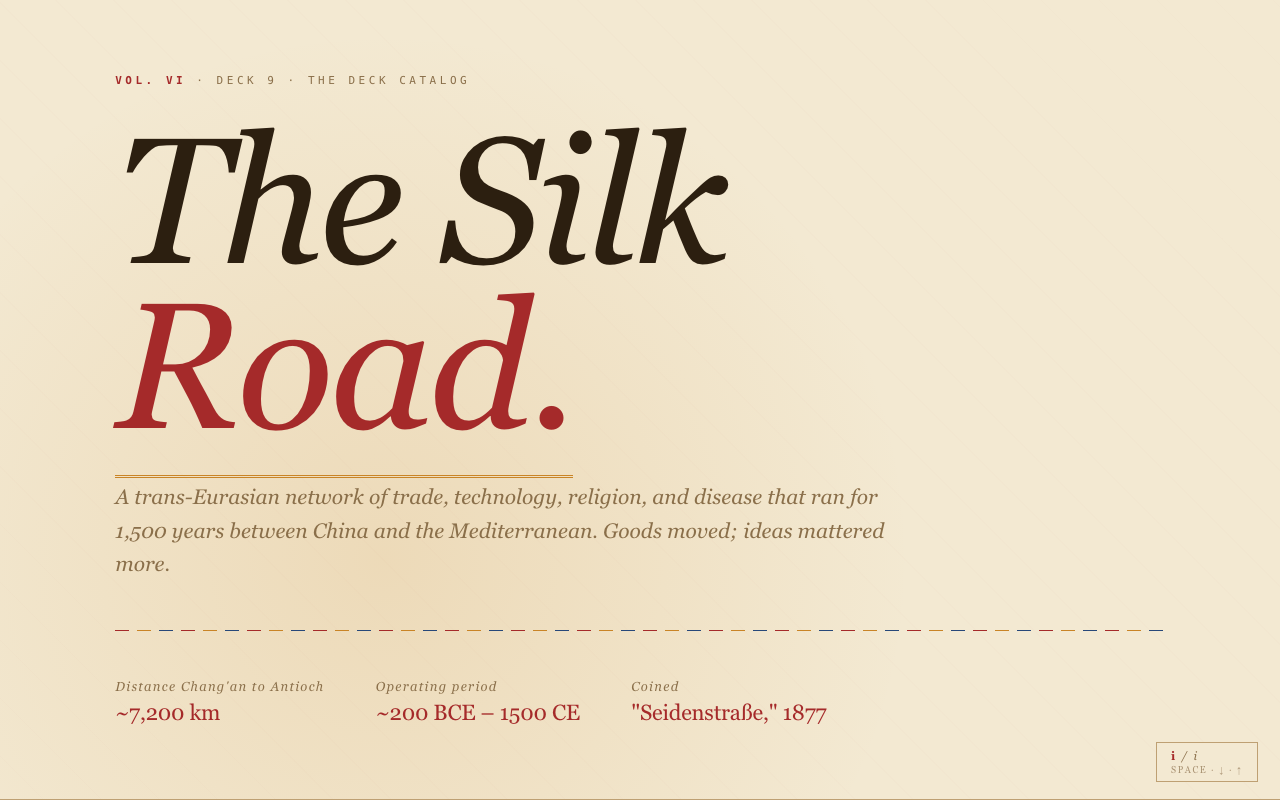
Silk Road

There was no Silk Road. There was no single route, no central administration, no continuous caravans walking from Xi'an to Constantinople. The phrase was coined by a German geographer in 1877 to describe something more diffuse and important — a sustained network of overland and maritime trade across Eurasia.

Geography32 slides

Tectonic Plates

The Restless Foundations of Our Dynamic Earth

Geography24 slides

Volcanoes of the World

Fire from the Earth

Geography32 slides

World Geography

No discipline tries to hold more at once. Geography is the science that has to put rocks, climate, water, vegetation, animals and humans on the same map and explain why they sit where they sit.

Geography30 slides

World Heritage

In 1972 the international community agreed that some places — the Pyramids, the Great Wall, the Galapagos — were the patrimony of all humanity, not just the states that happened to administer them. The agreement did something durable.