shipslides
Examples/Architecture
Vol. XIX / 17 decks

Architecture

Buildings, cities, styles, materials, landscape, sustainable design, and architectural history. Browse curated, sandboxed HTML presentation decks in Architecture, each with crawlable summaries, slide outlines, and topic metadata.

17
Decks
456
Slides

Architecture presentation hub

This collection gathers sandboxed HTML presentation decks for readers who want structured, visual introductions instead of a static document. Each indexed deck includes a summary, slide outline, topics, and a standalone viewer link when the deck passes the editorial quality gate.
Architecture30 slides

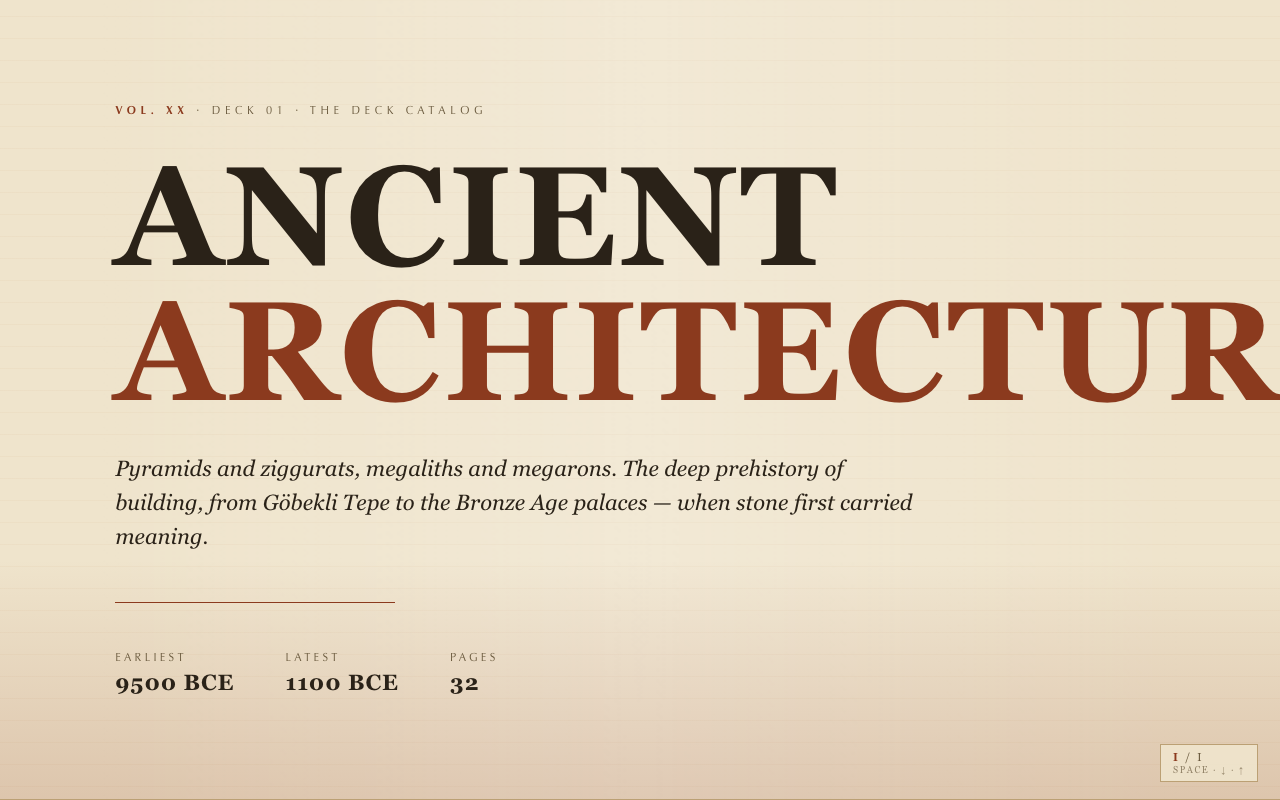
Ancient Architecture

Architecture begins not with shelter but with ceremony. The first monumental buildings predate agriculture; they predate writing; in some cases they predate the wheel.

Architecture22 slides

Art Deco Architecture

A Visual Journey Through

Architecture9 slides

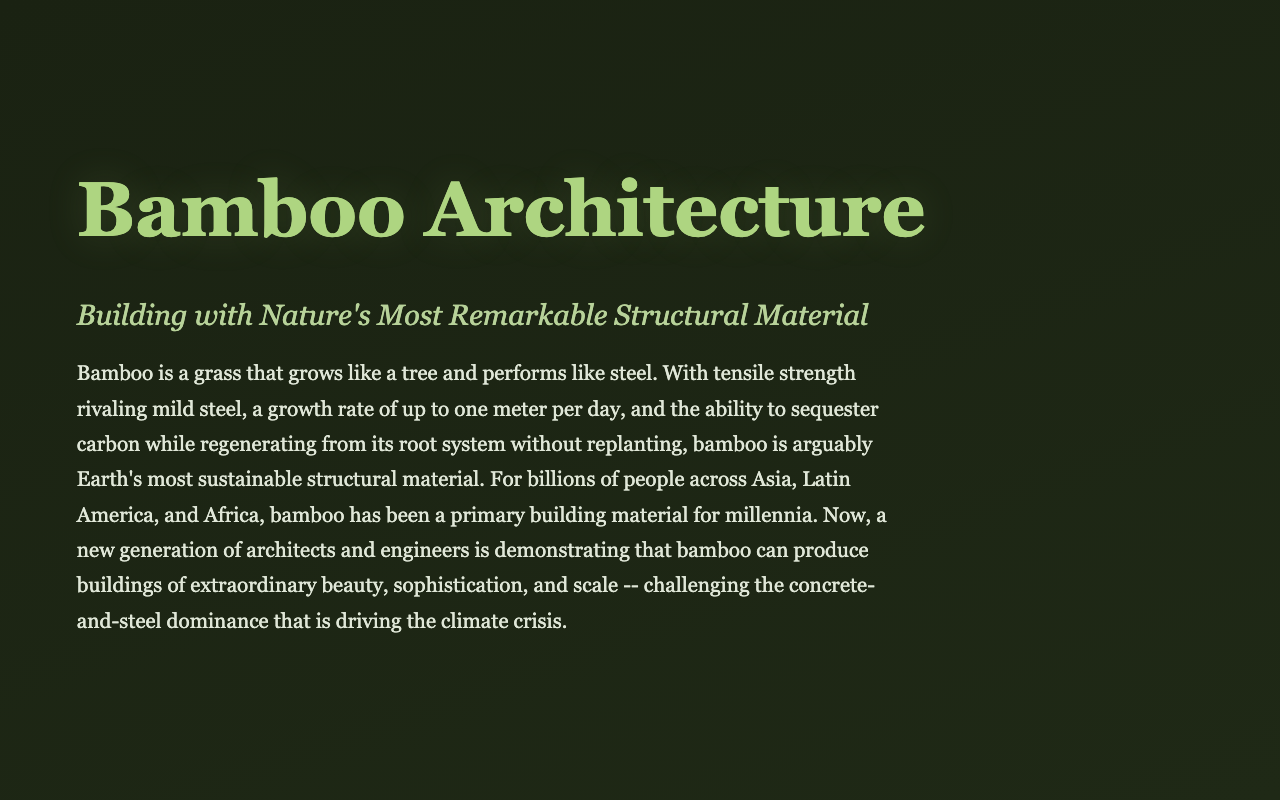
Bamboo Architecture

Building with Nature's Most Remarkable Structural Material

Architecture31 slides

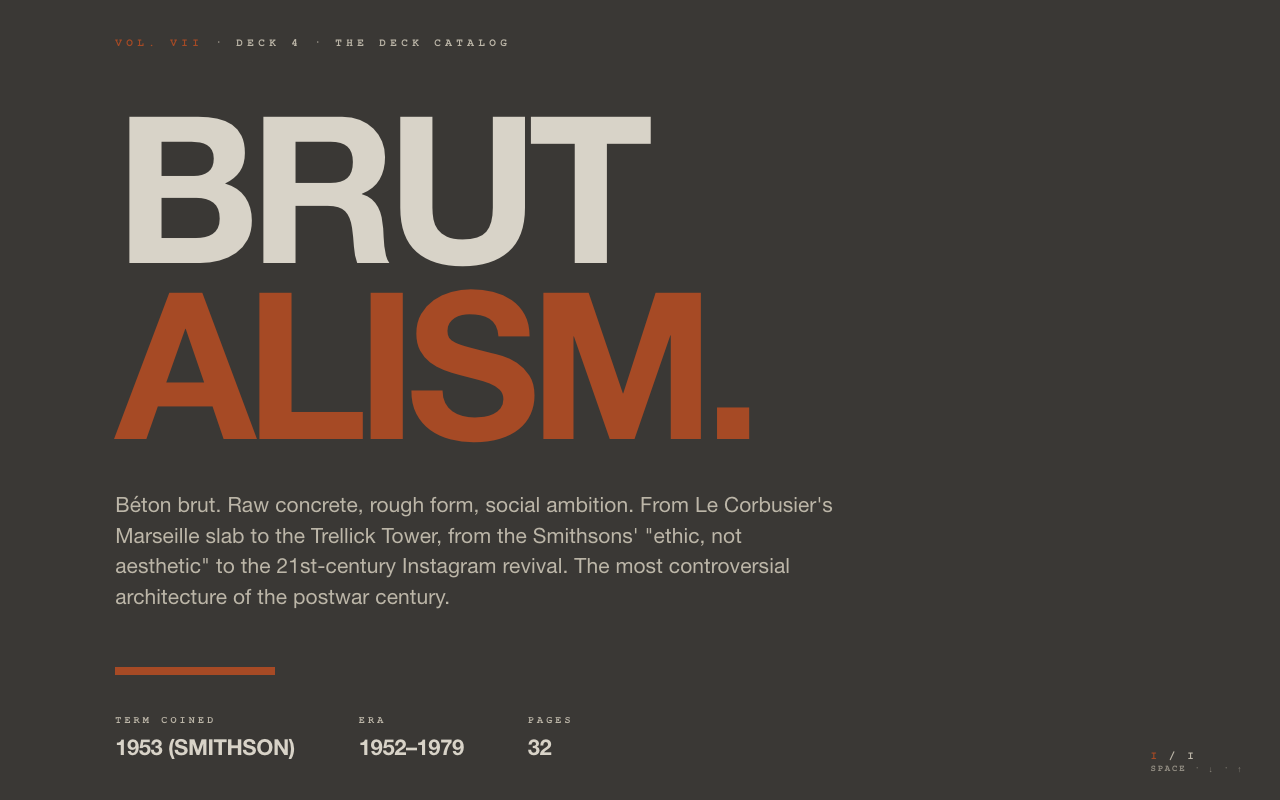
Brutalism

Brutalism is the most aggressively unloved style in the history of modern architecture, and also one of the most photographed. Half its buildings have been demolished or scheduled for it. The other half are listed monuments and Instagram backdrops.

Architecture30 slides

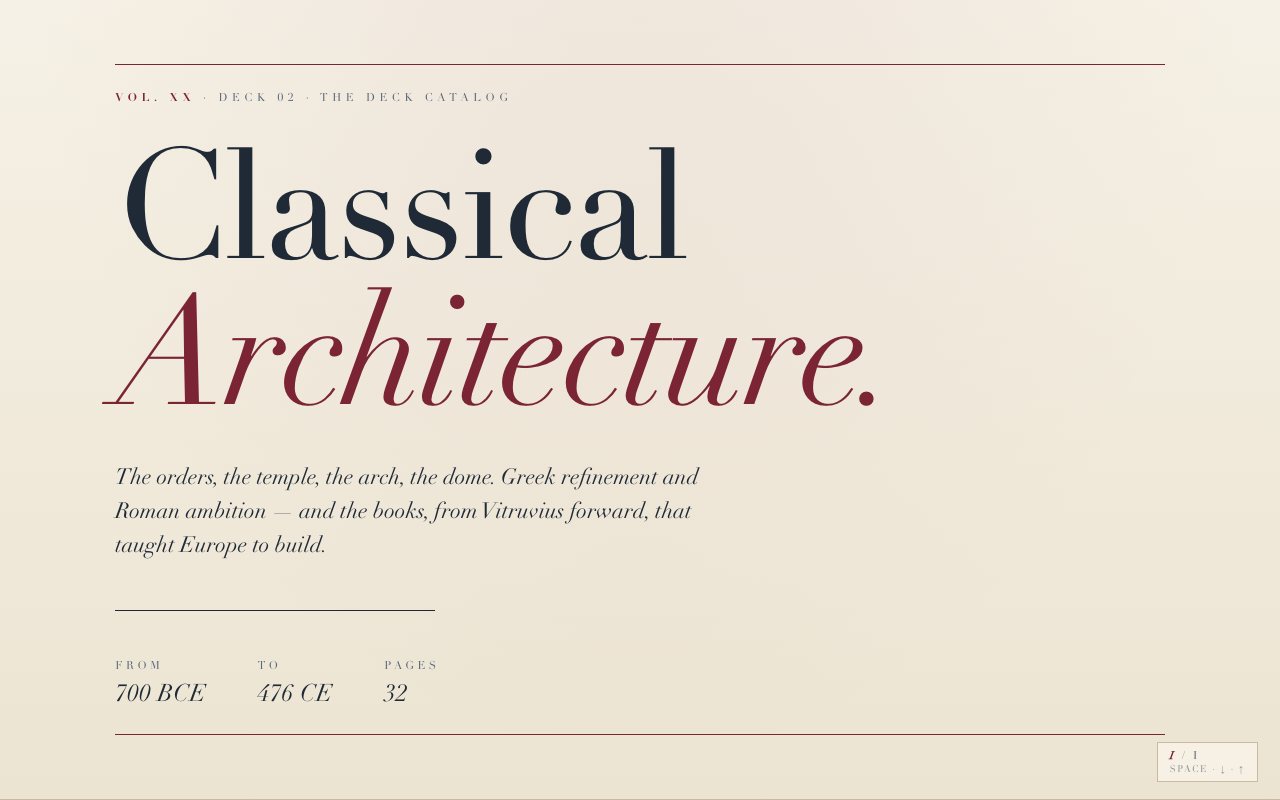
Classical Architecture

For two and a half millennia, "to build well" in the West has meant something close to: build the way the Greeks and Romans built. The argument is not yet over.

Architecture22 slides

Deconstructivist Architecture

Against Order, Beyond Form

Architecture30 slides

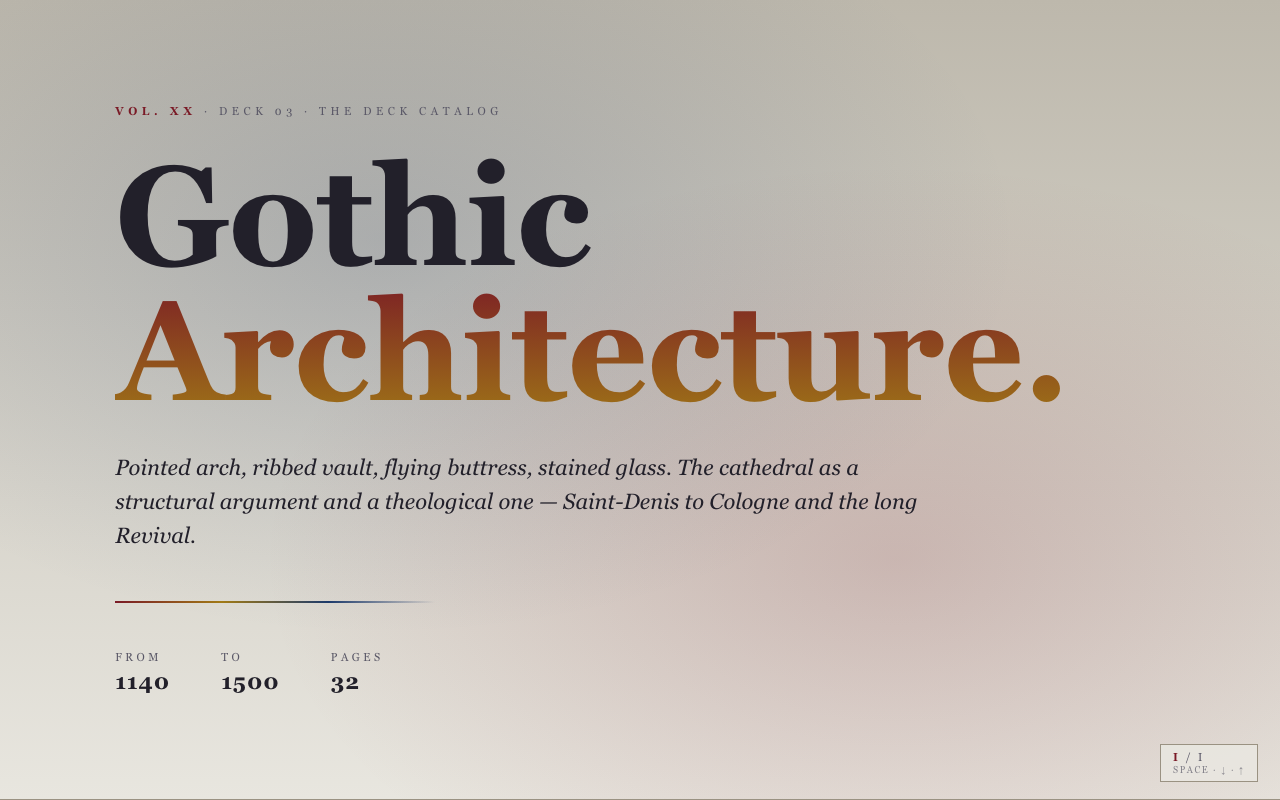
Gothic Architecture

Romanesque churches are thick walls with small holes for light. Gothic churches reverse the proposition: thin stone screens framing immense windows. The wall, structurally, dissolves.

Architecture10 slides

Architecture and the Housing Crisis

How Design Can Address the Defining Crisis of Our Cities

Architecture23 slides

Islamic Architecture

An Architectural Heritage Spanning Fourteen Centuries

Architecture32 slides

Japanese Architecture

From Sacred Groves to Metabolist Megastructures — 1,400 Years of Building Philosophy

Architecture31 slides

Landscape Architecture

Landscape architecture is the only design discipline that improves over decades. A garden completes itself in 30 years; a park reaches its character in 50; a designed forest becomes its imagined self in a century. Most landscape architects never see their best work.

Architecture31 slides

Modernist Architecture

Modernism is the architecture that decided history was over. From roughly 1910 to roughly 1970, an international generation of architects argued that the new materials of industry — steel, glass, reinforced concrete — required a new architectural language without historical reference, applied ornament, or regional inflection. They were partly right and partly catastrophically wrong, and the buildings they made now...

Architecture32 slides

Parametric Architecture

When Algorithms Shape Space — Computation, Craft, and the New Complexity

Architecture30 slides

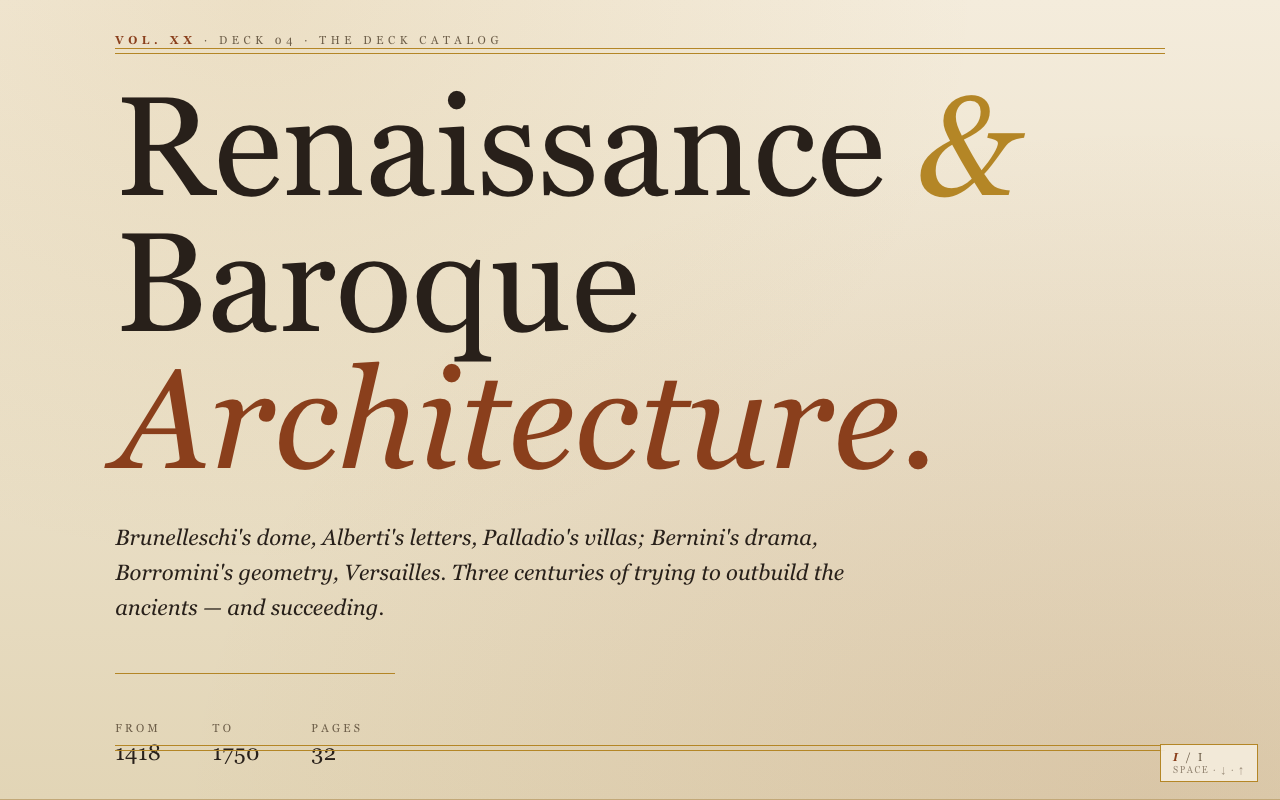
Renaissance & Baroque Architecture

The Renaissance is the rebirth of classical architecture. The Baroque is what classical architecture does once it has stopped being self-conscious about it.

Architecture31 slides

Skyscrapers

A skyscraper is not a tall building. It is a tall building made possible by three specific 19th-century inventions — the steel frame, the safety elevator, and the central HVAC system — that together permitted occupied space to rise hundreds of metres above the ground.

Architecture31 slides

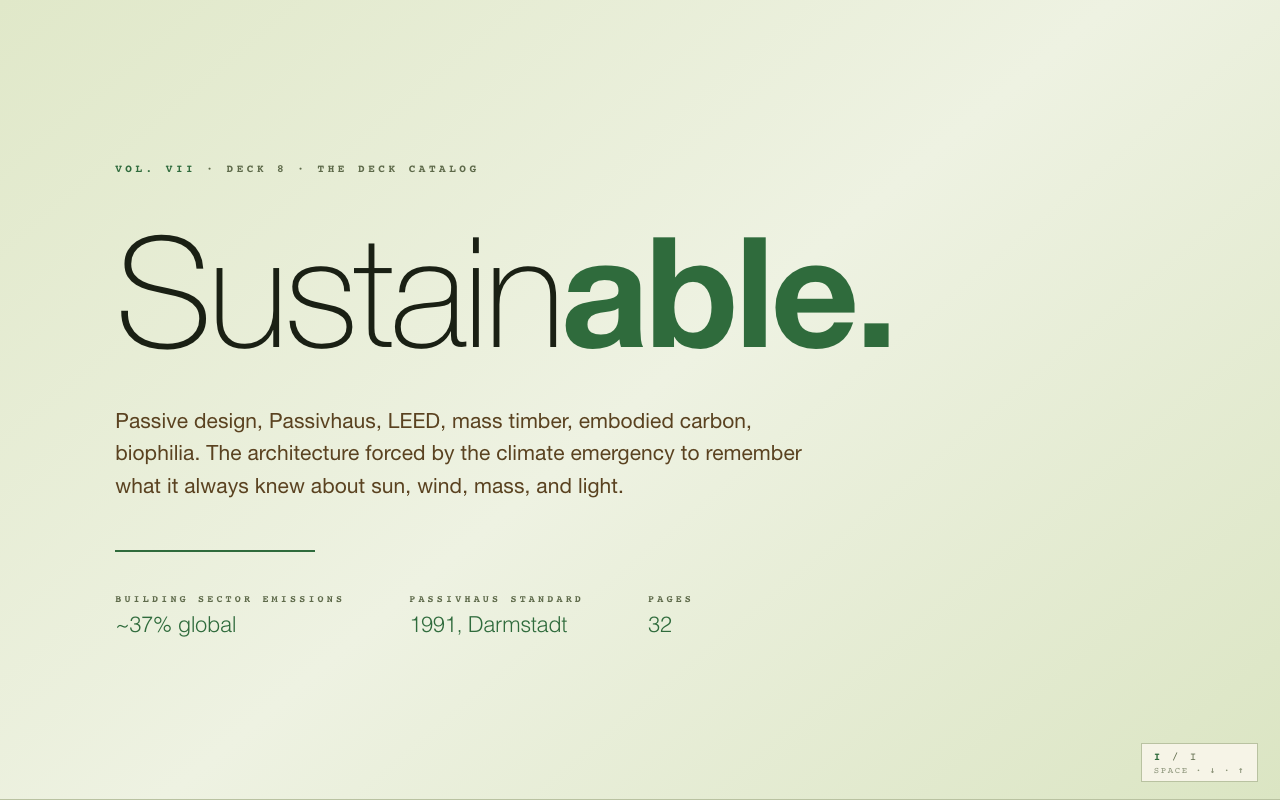
Sustainable Architecture

Buildings are responsible for roughly 37% of global energy-related greenhouse-gas emissions — about 27% from operating energy and 10% from embodied carbon in construction materials. The decarbonisation of architecture is not a sub-discipline; it is the central design problem of the next forty years.

Architecture31 slides

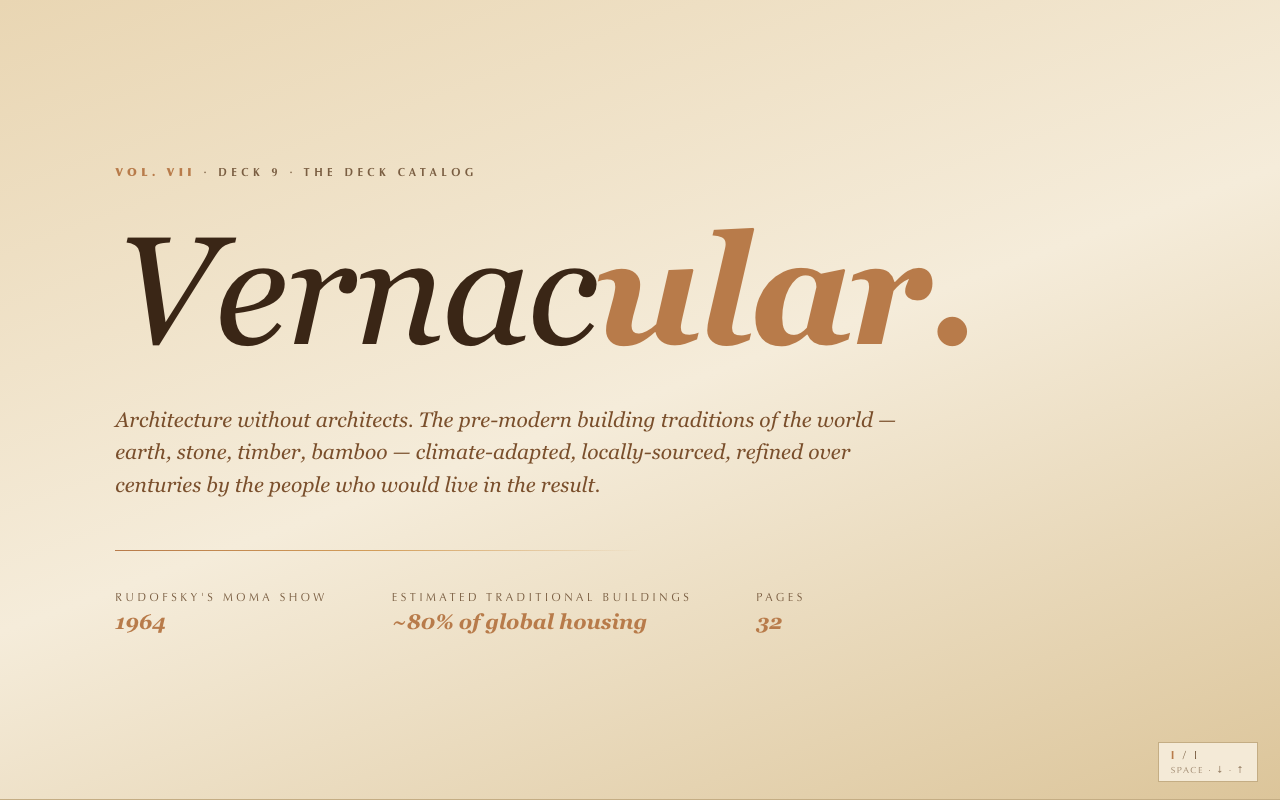
Vernacular Architecture

Vernacular architecture is the architecture of the people who would live in the result. It is built without architects, refined over centuries by trial and adaptation, sourced from local materials, attuned to local climate, and shaped by the social patterns of the community that builds it. Until 1964 it was largely invisible to the discipline of architecture; since then it has been one of the discipline's...